
Michigan Research
February 2026From guiding brain surgeons in real time to stress-testing cancer simulations in minutes, University of Michigan researchers are putting computational science and AI to work where it matters most. Explore this edition featuring the people and partnerships turning massive computing power into real advances across medicine, chemistry, energy and space weather, all guided by a commitment to making these tools trustworthy, sustainable and accessible.
What’s on This Page
Trusting virtual tumors: A U-M–led team stress-testing virtual tumors in minutes
Cancer simulations can model millions of cells dividing and growing inside a computer. But proving those simulations are trustworthy once took 22 days of nonstop computing. A U-M-led team built a method that compresses that critical stress test to under five minutes.
Read how U-M mathematicians are making complex cancer models faster to trust and easier to use.
Computational science and AI in service of science and society
By Karthik Duraisamy
Arthur B. Modine Professor of Engineering
AI that guides surgeons in real time, simulations that accelerate drug discovery, models that forecast extreme weather: computation has become the connective tissue of modern science. Karthik Duraisamy shares his vision for how U-M is leading that transformation.

Reducing drug failures with AI, human liver organoids
By Kate Barnes
Nine out of 10 drugs that enter human trials fail. U-M researchers are using miniature human liver tissues grown from patient stem cells and AI to predict toxicity with 90% accuracy before costly trials even begin.
Read how U-M researchers are using AI and human organoids to make drug development safer and faster.
Impact Stories: Research at Michigan
AI is saving lives by spotting cancer surgeons cannot see
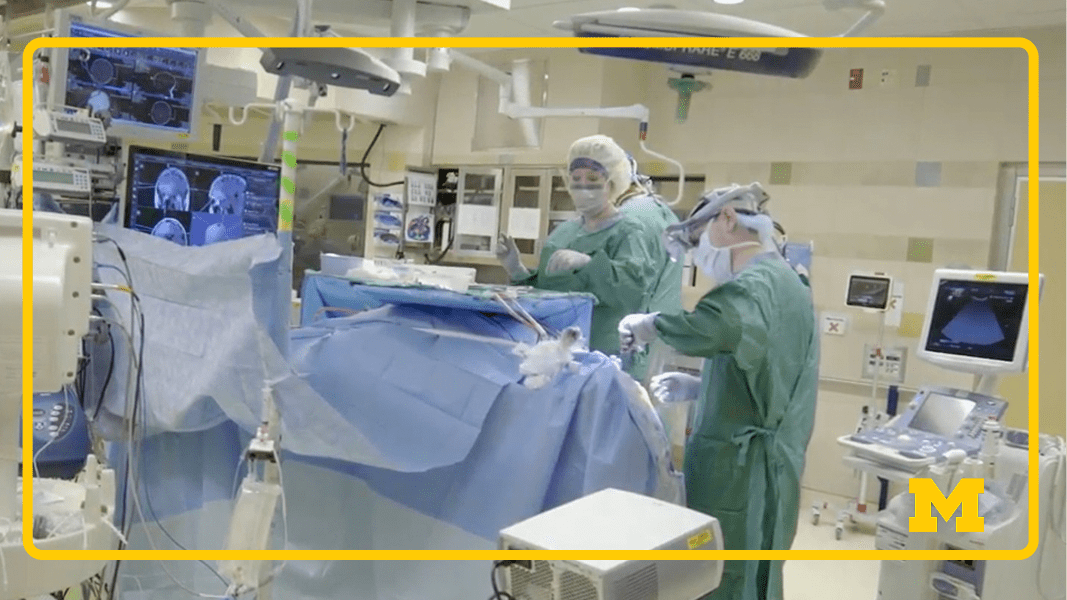
One in four brain cancer patients used to leave surgery with residual tumor. An AI tool developed at U-M now analyzes tissue in seconds during surgery, cutting that rate to just 4%. Read how U-M neurosurgeons are using AI to see what the human eye cannot.
By Wendy Sutton
Considering the particulars: how AI can help advance chemical system research
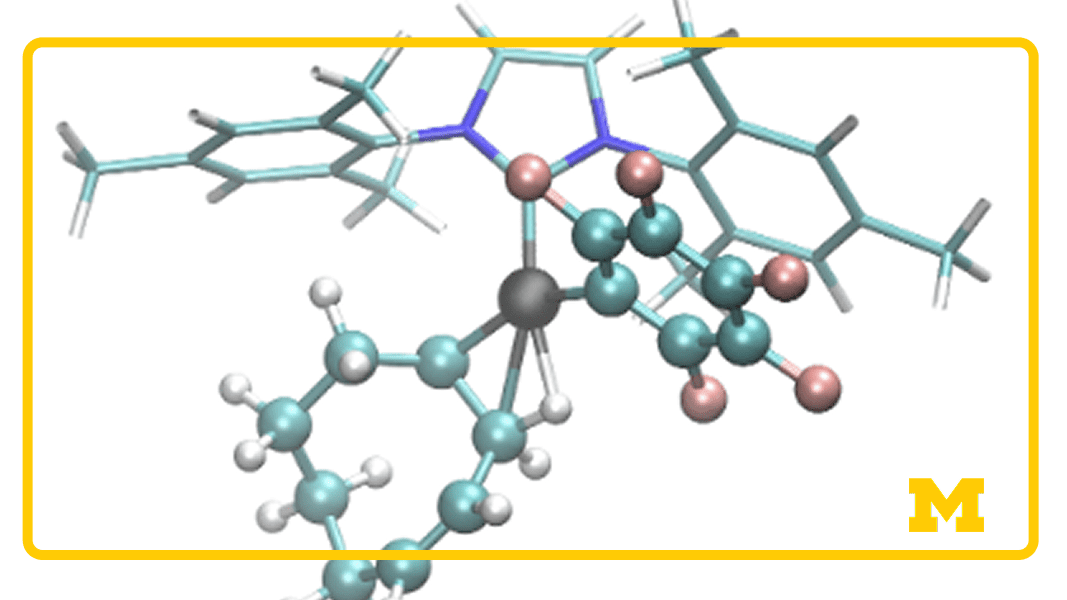
An expert chemist might recognize about 1,000 chemical bonds in a lifetime. U-M researcher Paul Zimmerman is building AI tools trained on data sets that can identify hundreds of thousands in months, accelerating discovery across industries.
By Kate Barnes

Forecasts solar storms: U-M teams up to predict—and protect against—space weather
Streams of charged particles hurtling at 800 kilometers per second can disrupt satellites, power grids and GPS. U-M researcher Tuija Pulkkinen is building computational models to forecast these solar storms before they strike.
By Wendy Sutton
A faster path to finding life-saving medicines
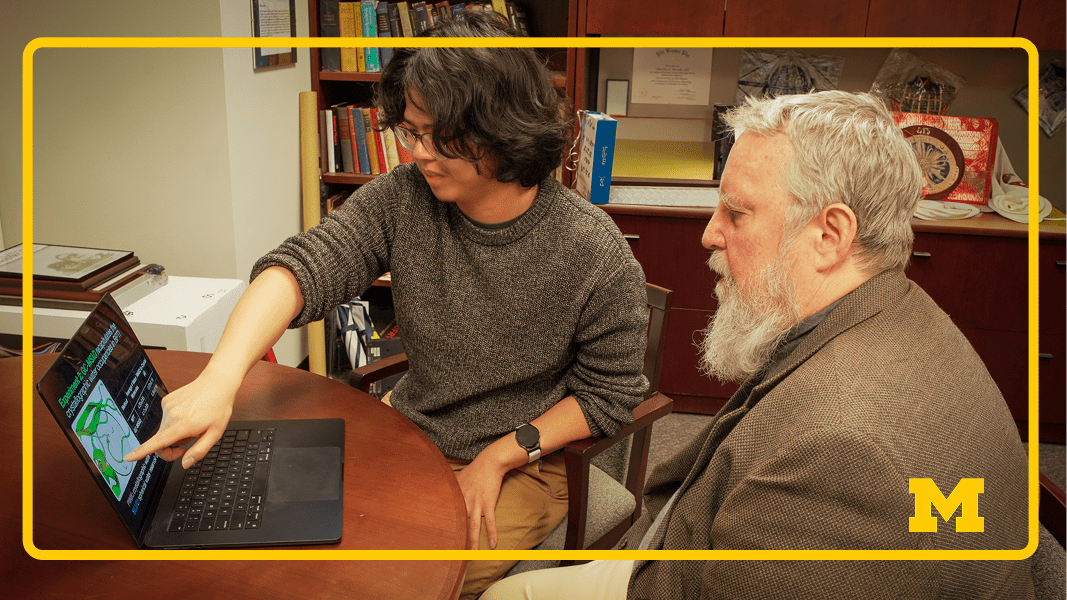
U-M chemist Charles Brooks is using computational shortcuts and AI to test thousands of drug candidates at once, turning a process that once took months into days and boosting success rates a thousandfold.
By Wendy Sutton
Forging a path to scalable, sustainable computing
Every AI breakthrough comes with a hidden cost: energy, water and resources. U-M computer scientists are attacking the problem from every angle, from chips that waste less silicon to software that cuts training energy use by half.
By Emily France
About Michigan Research
Michigan Research is the University of Michigan’s flagship monthly e-newsletter, produced by the Office of the Vice President for Research. Each edition spotlights groundbreaking U-M research and scholarship that addresses critical challenges, sparks innovation and shapes the future across a range of disciplines.