
8 Building Blocks of Culture Change
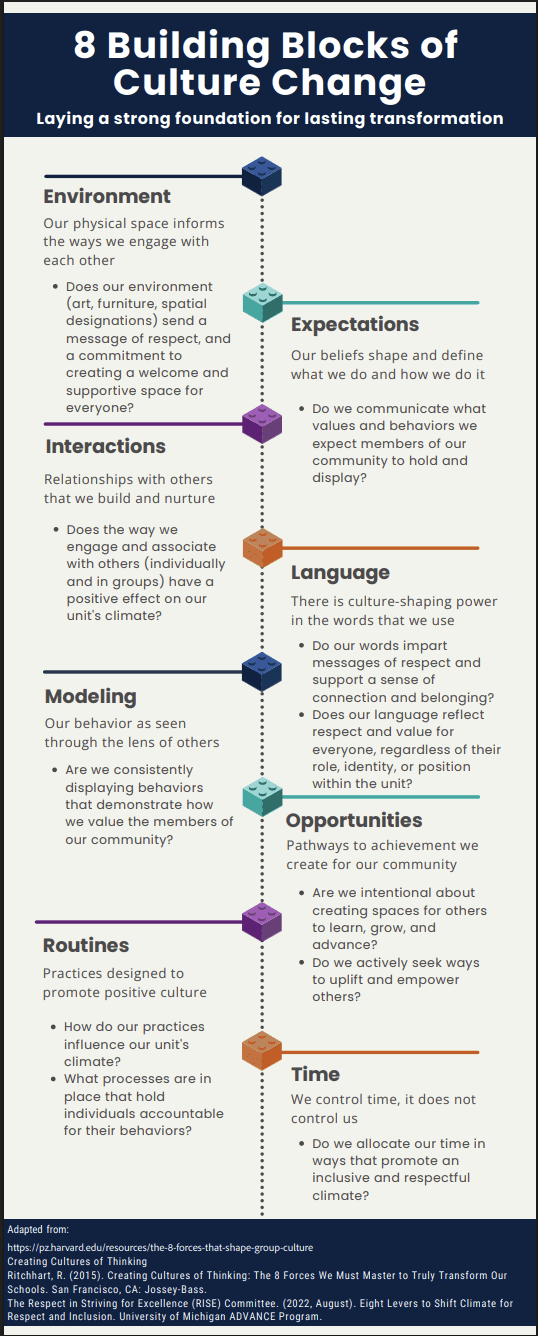
We’re bringing our workplace culture to life through the 8 Building Blocks of Culture Change—a practical framework inspired by educator Ron Ritchhart and his work with Project Zero at Harvard. His Eight Cultural Forces have helped schools and organizations around the world shape environments that support deep thinking and meaningful collaboration.
At the University of Michigan Office of the Vice President for Research, these building blocks help us name what matters most in our day-to-day work: how we set expectations, manage our time and collaborate as a research community. Most importantly, they give us simple, actionable ways to align our environment with our values.
FOUNDATIONS: Laying the Groundwork for Transformative Change
We’re kicking off something new: the Foundations series. Think of it as a set of quick, practical posts designed to make culture change feel doable in everyday ways. Each installment unpacks one of the 8 Building Blocks of Culture Change, sharing simple tools, team practices and examples from across OVPR that you can put into action right away.
We’ll be sharing a new Building Block every other month, each with ideas you can put into practice right away. To kick things off, our first feature focuses on Environment—the spaces, both physical and digital, that shape how we work together. From common rooms to shared drives, small choices in our environments can strengthen collaboration, communication and belonging. Check out the Environment block to see how these shifts can help build stronger teams and support higher-impact research.
The spaces we create, both physical and virtual, send strong signals about what is valued and how we work together. Thoughtful environments invite engagement, visibility and connection, encouraging participation and building trust. Even small shifts in how we shape our spaces can have a big impact on how individuals show up.
Clear expectations help people understand their roles, purpose and place within a team. Values become real when they are reflected in what we consistently expect, not just in what we say. When expectations are explicit, people are better able to align their efforts and behavior with shared goals.
Every interaction reflects and reinforces culture, shaping what is encouraged, tolerated or ignored. Strong cultures grow out of consistent, respectful and connected relationships. The quality of daily interactions ultimately determines the climate we create together.
The words we use shape how people feel, think and engage in real time. Language has the power to clarify, connect and build others up. Choosing language intentionally helps reinforce the kind of culture we want to sustain.
The way we model behaviors communicates expectations clearly and shapes the cultural norms others follow. This kind of modeling is not limited to individuals in formal leadership positions, since everyone’s behavior influences the culture around them.
Opportunities
Growth, leadership and contribution do not happen by accident. Paying attention to who receives stretch roles, visibility and mentorship reveals much about how opportunity is distributed. Creating deliberate access points ensures more people can contribute at their fullest potential.
Routines
Daily patterns and practices make culture visible. Well-crafted routines provide consistency, trust and clarity, and they strengthen the foundation for how teams work together. The habits we build as individuals and teams shape the climate we experience.
Time
How time is spent signals what matters most, making it one of the clearest cultural cues. Setting aside dedicated time for reflection, feedback and connection demonstrates that these practices are valued. Being deliberate with how we allocate time helps build and sustain a strong, thoughtful culture.