
Preparing communities for a new era of wildfire risk
By Vanessa Vinson
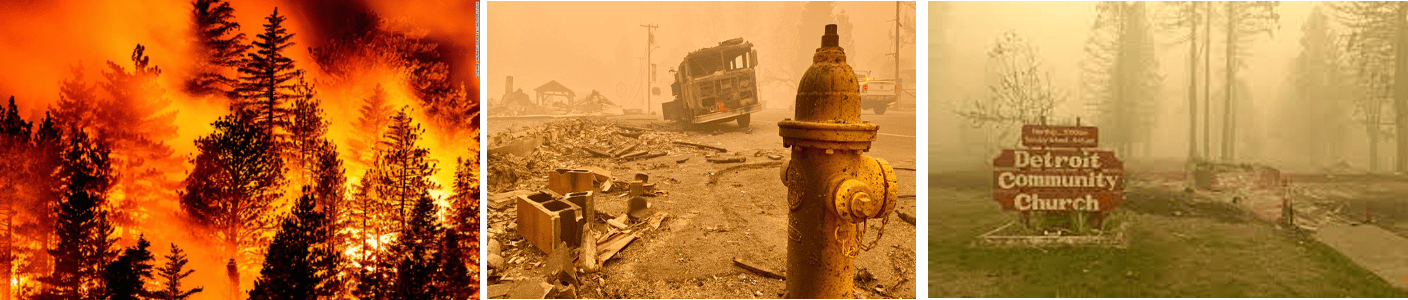
For generations, communities west of the Cascade Mountains in the Pacific Northwest have lived among dense, rain-soaked forests where large, severe wildfires were rare. The fires that swept through the area in 2020 challenged many residents’ expectations about that risk.
University of Michigan researcher Paige Fischer is leading a new $3 million National Science Foundation project to study how wildfire hazards are changing in the region and how communities can prepare.
“It’s kind of like a tsunami,” Fischer said. “You know that they happen every few hundred years, but you don’t think it’s going to happen in your lifetime. And then it happens.”
Fischer, a researcher in U-M’s School of Environment and Sustainability, brings expertise in how people perceive environmental risks and decide whether to act. Her team will combine that perspective with environmental science, engineering and AI to study wildfire in the temperate rainforests of the western Pacific Northwest.
Historically, large, severe wildfires in these forests have occurred at intervals of roughly 100 to 500 years. But abundant vegetation can fuel intense fires when dry conditions, strong winds and ignition sources coincide.
The researchers will examine whether changing conditions are producing new patterns of wildfire activity, particularly where homes meet forested landscapes. They will also investigate what helps communities recognize those risks and take steps to protect themselves.
Preparing for a changing environment
The project builds on Fischer’s previous research into how people respond to environmental change, with a new emphasis on transformational adaptation: fundamental changes in how communities live, build and plan for environmental risk, rather than small adjustments made after a disaster.
“You’re not just making small incremental reactive changes to reduce risk,” Fischer said. “You’re actually dramatically changing the way that you function.”
For communities facing increasing wildfire hazards, that could mean constructing homes with fire-resistant materials, creating safer places to shelter during extreme smoke events or establishing areas of reduced vegetation to slow the spread of fires.
These practices are more familiar in regions with a long history of wildfire. In parts of the Pacific Northwest, adopting them may require residents and local leaders to rethink their reliance on wet conditions to limit fire risk.
Fischer and her colleagues will study the social, psychological and governance factors that influence those decisions. They want to understand what makes communities willing and able to put protective measures into practice and what stands in their way.
Combining technology and human behavior
U-M engineering researcher Ann Jeffers is leading work that uses fluid dynamics models to simulate fire behavior in the wildland-urban interface, where homes and other structures meet natural vegetation.
The team will examine how wildfires spread across landscapes and use advanced modeling to evaluate strategies for protecting neighborhoods and infrastructure.
Running these simulations across large geographic areas requires significant computing power. AI will help researchers apply the models at broader scales and evaluate mitigation strategies in multiple communities.
The researchers also plan to turn their findings into resources that local officials can use. Working with partners, including Oregon State University Extension, the team will develop an adaptation toolkit for community planners, emergency managers and natural hazard professionals.
Building the collaboration through Bold Challenges
The NSF project will be part of the Western Forest and Fire Initiative (WFFI), which grew in part from collaborations developed through U-M’s Bold Challenges initiative, a university-wide effort that helps interdisciplinary research teams address complex societal challenges. Fischer participated in the original Boost 1.0 cohort and other programs that helped researchers from different disciplines develop ideas and build teams.
One early effort examined extreme wildfire smoke and how people perceive and respond to its risks. Fischer also participated in a team formation program while developing the WFFI that focuses on how communities and ecosystems can adapt to hotter, smokier and increasingly flammable conditions.
“Those two programs helped us kind of develop the value proposition, like how would this be useful for society?” Fischer said. “What are we going to do that’s different?”
The Bold Challenges programs helped researchers establish working relationships, develop shared research priorities and create the communication and project management processes needed for a complex interdisciplinary collaboration. That groundwork helped position Fischer to lead the NSF proposal.
Looking beyond the Pacific Northwest
Although the project focuses on the Pacific Northwest, Fischer sees potential applications in other places facing unfamiliar wildfire risks, including Hawaii and the upper Midwest.
She is also studying extreme wildfire smoke and the challenges people face when smoke, heat and wildfire occur at the same time. Homes and workplaces that were not designed for those conditions can leave people with limited ways to protect themselves.
Over the next several years, the NSF-funded team will study changing fire patterns, test mitigation strategies through modeling and examine what helps communities make lasting changes in how they prepare.
The work requires more than an understanding of fire itself. Climate change, land management, development and human behavior all shape the risks communities face.
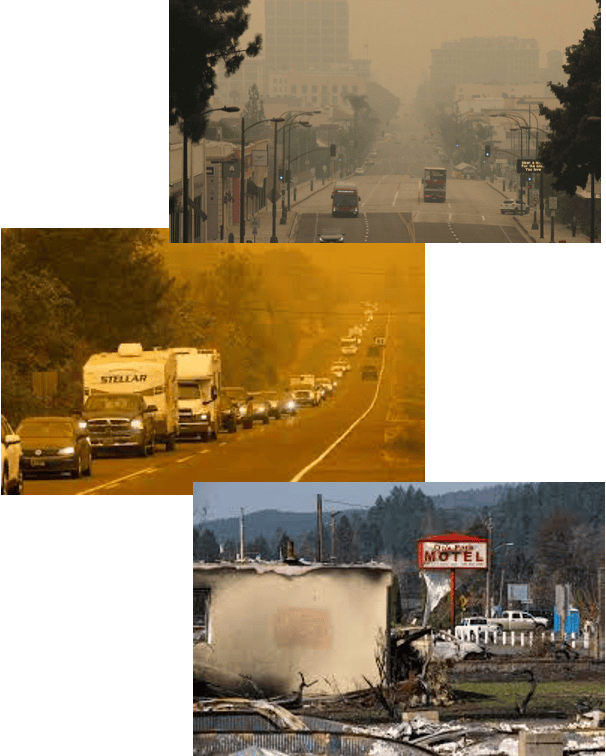
“There’s no easy answers,” she said. “It’s not just like, let’s come up with better technologies to put out when fires ignite in high biomass forests, they can become very large, severe and difficult to control.”
For Fischer, bringing those different fields together is central to the project.
“That’s really where you get innovation and new ways of looking at problems,” she said, referring to the integration of knowledge and methods across disciplines.
Ultimately, the team hopes its research will help communities anticipate emerging wildfire threats and make lasting changes to protect people, property and infrastructure before disaster strikes.