
Interdisciplinary approach at U-M transforms patient care and innovation
By Alexi Pierce
Innovation Partnerships
The University of Michigan is renowned for its excellence in academics, athletics and healthcare.
Yet one of its most powerful assets often goes unrecognized: a culture of interdisciplinary collaboration.
By fusing the expertise of Michigan Engineering and Michigan Medicine — and harnessing the commercialization expertise of Innovation Partnerships — U-M is driving groundbreaking advances that are changing the landscape of patient care.
The University of Michigan’s transformational model
Leveraging its brilliant technology, impressive scale, and interdisciplinary culture, U-M has built a framework for transformational innovation supported by robust commercialization pathways.
“Across campus, faculty and students know their ideas will be heard – not just within their disciplines, but by colleagues and commercialization experts,” said Arthur Lupia, vice president for research and innovation. “Michigan’s approach is a blueprint for what universities can accomplish when they refuse to silo knowledge.”
That blueprint is reflected in the numbers: in the last five years, U-M has launched more than 130 startups, many of which trace their roots to engineering-medicine collaborations. Countless patients worldwide have benefited from U-M-developed therapies and devices with 11 approved therapeutics and 31 marketed devices. In every case, Innovation Partnerships has been a partner, helping the visionary faculty and researchers navigate the process to bring their innovations to market.
A breakthrough born from U-M’s culture of collaboration
HistoSonics is a powerful example of what happens when engineers and clinicians at the University of Michigan work side by side.
The company, founded in 2009 with support from Innovation Partnerships, began as a joint effort between researchers in Michigan Medicine and the College of Engineering.
Their pioneering collaboration led to the development of histotripsy, a non-invasive method of using focused ultrasound waves to destroy tumors. Instead of heat, radiation or surgery, the technology creates tiny bubbles that gently disrupt and destroy cancerous tissue.
In 2023, HistoSonics’ Edison System received FDA clearance to treat liver tumors, and it is currently being evaluated for use on pancreatic and kidney tumors. In 2025, the company announced a $2.25 billion acquisition and secured an additional $250 million in funding.
“We are grateful for the support we received from the University of Michigan on our journey to invent histotripsy and develop it into a platform that can be leveraged broadly to treat patients,” said Zhen Xu, Li Ka Shing Professor of Biomedical Engineering.
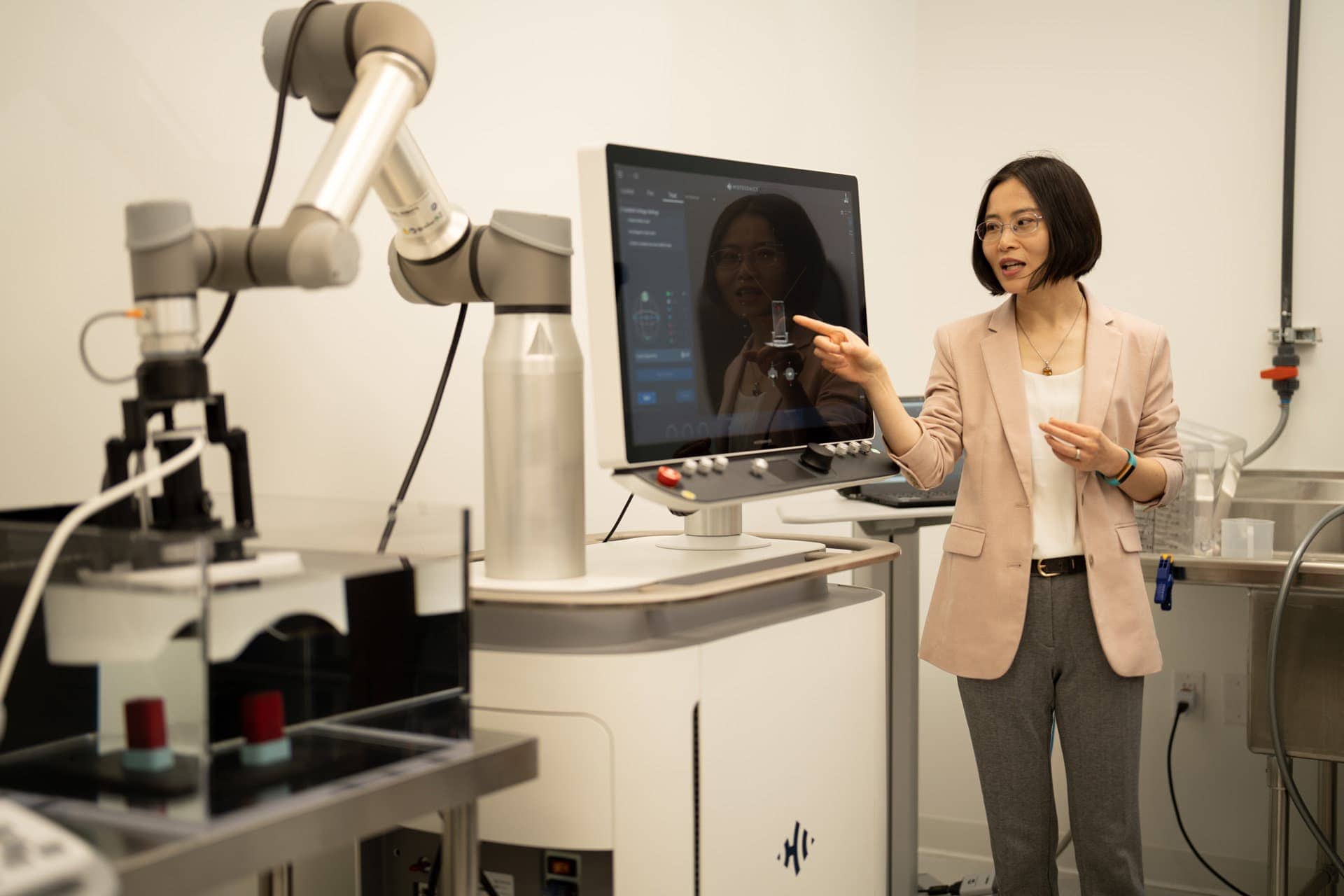
Zhen Xu, Li Ka Shing Professor of Biomedical Engineering.
Photo credit: Michigan Photography
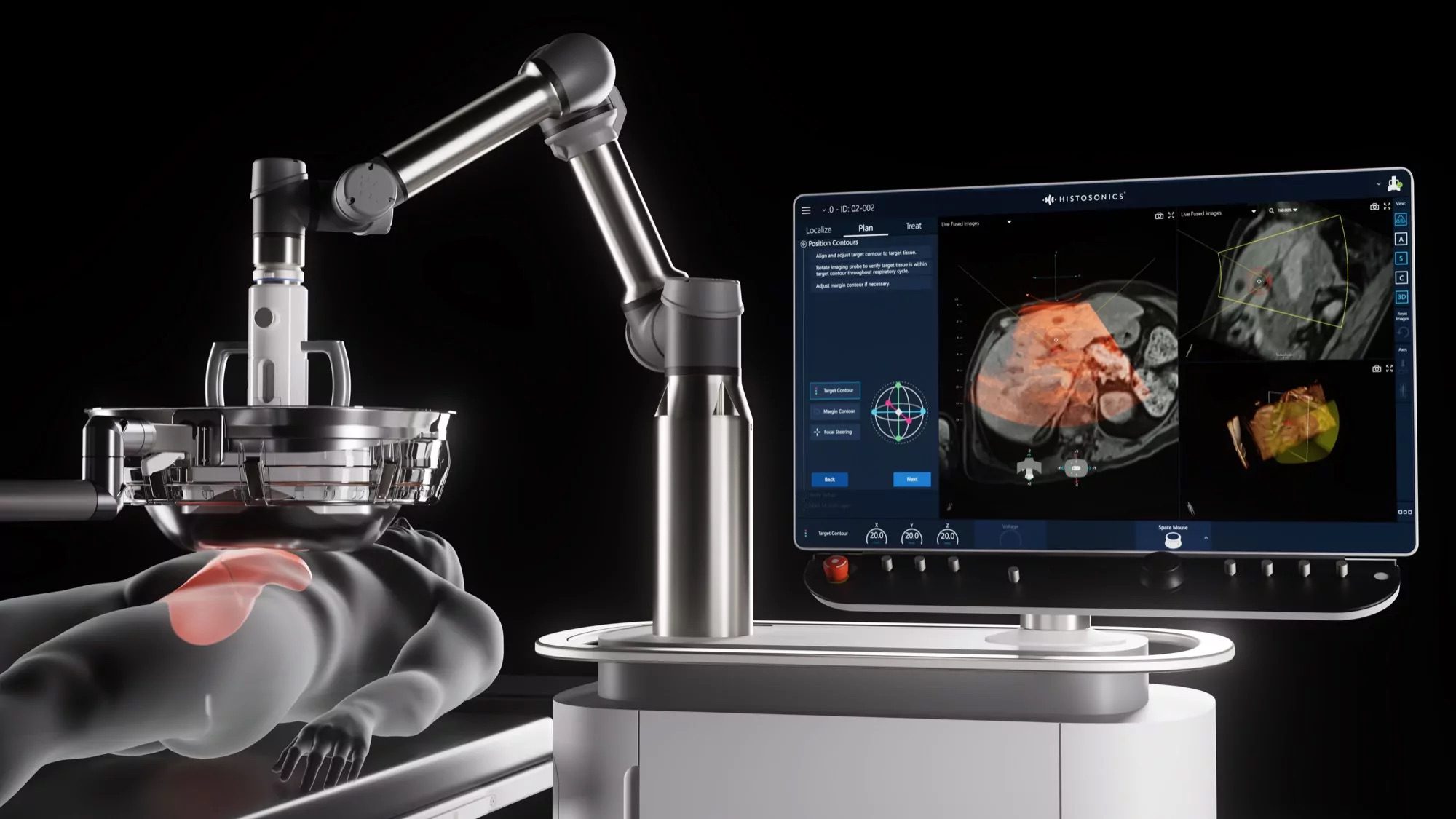
Edison Histotripsy System uses histotripsy, a non-invasive method of using focused ultrasound waves to destroy tumors
Photo Credit: Histonics
“Our ability to collaborate across teams at Medicine and Engineering is what allowed us to discover histotripsy and I am proud to work at a place like Michigan where this type of collaboration is encouraged. Combined with the support of Innovation Partnerships who helped us every step of the way on our commercialization journey and aided us in shifting from an inventor to entrepreneur mindset, I feel incredibly fortunate to be here and have the types of resources available that we do.”
Today, HistoSonics employs more than 350 people, has treated more than 3,000 patients globally and is driving future innovations at its Ann Arbor-based advanced research center.
Reimagining vascular disease treatment
Amplitude Vascular Systems, or AVS, is transforming care for patients with severely calcified arterial disease. This debilitating condition involves the buildup of calcium deposits in the arteries and can increase a patient’s risk for major cardiac events, including heart attacks and strokes.
AVS’s solution to this problem: pulsatile intravascular lithotripsy therapy, a new tool designed to break up calcified arterial plaque without damaging healthy tissue.
AVS was founded in 2019 by a team of U-M clinicians and engineers. With support from Innovation Partnerships and the Michigan Translational Research and Commercialization (MTRAC) Life Sciences Innovation Hub, the researchers combined their clinical and engineering expertise to turn a lab concept into a device crafted for real-world use.
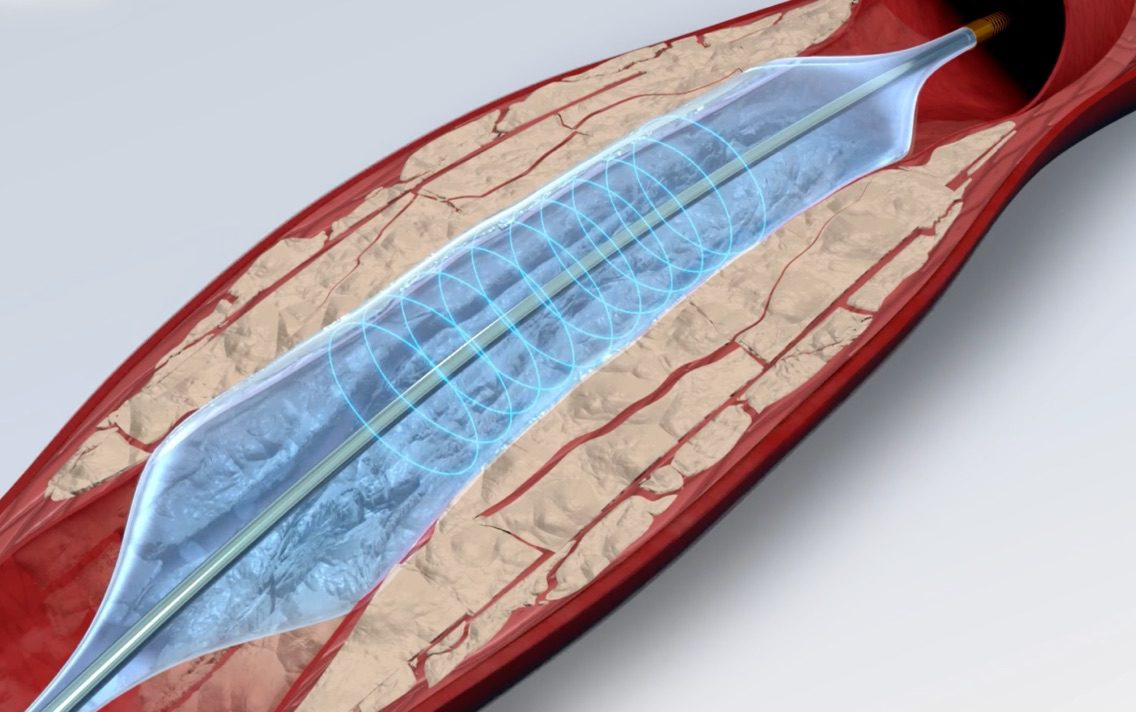
Pulse IVL System – a single device that expands the affected artery and breaks apart calcium plaque build-up.
Photo Credit: Amplitude Vasuclar Systems (AVS)
The collaboration led to the Pulse IVL System, a single device that both expands the affected artery and breaks apart calcium plaque build-up. The device aims to provide both an increased quality of care for patients and a simpler treatment option for practitioners.
“Our collaboration was seamless,” said Hitinder Gurm, Park Willis III professor in cardiovascular medicine, professor of internal medicine and chief medical officer of the medical school. “By working together we not just built a product, but we were able to address the real-world pain points we see every day in the clinic. That’s what innovation should look like – directly informed by patient need.”
Earlier in 2025, AVS raised $36 million in a Series B round of financing. The company is now anticipating FDA clearance in 2026.
Next-generation solutions for vessel clotting
Another breakthrough from a University of Michigan medical-engineering partnership is Endovascular Engineering, or E2, which is developing new tools to remove dangerous blood clots. Their flagship product, the Hēlo Thrombectomy System, is designed to remove clots from the lung.
The idea grew from a collaboration between clinicians and engineers at U-M who combined their perspectives to design a tool that could make clot removal safer and more effective for patients.
“I feel incredibly lucky that we have the ability to work so seamlessly across disciplines here at Michigan,” said Albert Shih, professor of mechanical engineering and biomedical engineering. “We are going through the trial process now and look forward to helping more patients with the Helo system in the future.”
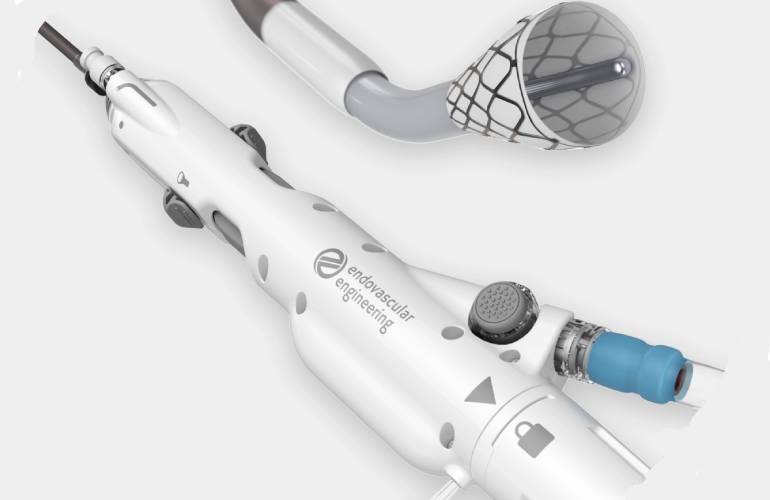
Hēlo Thrombectomy System – designed to remove clots from the lung
Photo Credit: Endovascular Engineering (E2)
E2 launched as a startup in 2020 with support from Innovation Partnerships and continued to refine its approach through U-M’s commercialization programs – including the Coulter Program and the MTRAC Life Sciences Innovation Hub – gaining guidance that helped the team move from an early concept to a market-ready product.
Earlier this year, the company announced that it raised $42 million in a Series B financing round, followed by positive results from a key clinical trial evaluating the Hēlo system for treating pulmonary embolism, a serious form of lung clot.
Looking ahead: The next era of collaborative medicine
With continued investment in shared research programs, campus-wide innovation resources and the ongoing expansion of entrepreneurial support, the University of Michigan is poised to accelerate its role as a global medical solutions hub. For faculty, students, clinicians and the wider healthcare community, this means more breakthroughs and more lives changed for the better.
“We are fortunate at the University of Michigan to foster an extraordinary spirit of collaboration. The partnership between Michigan Medicine and Engineering continues to fuel groundbreaking innovations and empower us to solve some of the most complex challenges in patient care,” said Kelly Sexton, associate vice president for research – innovation partnerships and economic impact.
“Our role at Innovation Partnerships is to help translate these discoveries beyond the lab and into clinical practice, where they can improve and save lives. Together, we’re redefining what is possible in healthcare and paving the way for a healthier future for all.”
As AVS, E2 and HistoSonics pave new paths forward for patients, one thing is clear: at the University of Michigan, the fusion of engineering and medicine is not just aspirational — it is practical, powerful and essential. With Innovation Partnerships collaborating with university innovators, these discoveries are making their way into hospitals and homes, improving health outcomes for generations to come.
Xu and U-M have a financial interest in HistoSonics. Gurm, Shih and U-M have a financial interest in Amplitude Vascular Systems. Shih and U-M have a financial interest in Endovascular Engineering. HistoSonics and Endovascular Engineering were formed with support from U-M’s Coulter Translational Research Program and Innovation Partnerships.