
Each year in the United States, approximately 300 children are diagnosed with diffuse intrinsic pontine glioma (DIPG), a particularly aggressive form of brain tumor. More than 290 of them will die from their disease, with an average survival time from diagnosis of less than one year.
There is only one FDA-approved treatment for DIPG, approved just earlier this year. That therapy, which arose from recent research led by the University of Michigan Rogel Cancer Center and the Chad Carr Pediatric Brain Tumor Center, was the first to show improved outcomes after nearly 250 clinical trials for other drug candidates.
And while the new treatment has shown extended survival times for some patients, there is still no cure for this disease.
One reason DIPG has been so difficult to treat stems from a genetic mutation found in the tumor, says pediatric oncologist John Prensner. The mutation lies in what is called a histone gene, which plays a central role in organizing how DNA is packaged inside cells. The result is that the cancer cells package DNA incorrectly, which leads to the genetic material being used in ways that advance the disease.
“The challenge with this particular mutation is that it makes the tumor resistant to any known chemical structures,” says Prensner, who is also an assistant professor of pediatrics and biological chemistry in the U-M Medical School.
It is a challenge that medicinal chemist Ashu Tripathi had been pondering in his work as director of the Natural Products Discovery Core (NPDC) at the U-M Life Sciences Institute, one of the university’s many research cores which offer specialized research services, equipment or expertise to U-M researchers, often at a recharge rate.
Tripathi hypothesized that the solution may lie in nature.
More than half of approved cancer drugs have their origin in natural products – chemical compounds that plants, bacteria, fungi and other microscopic organisms produce as part of their natural survival and defense mechanisms. And the NPDC is home to one of the world’s largest libraries of natural products.
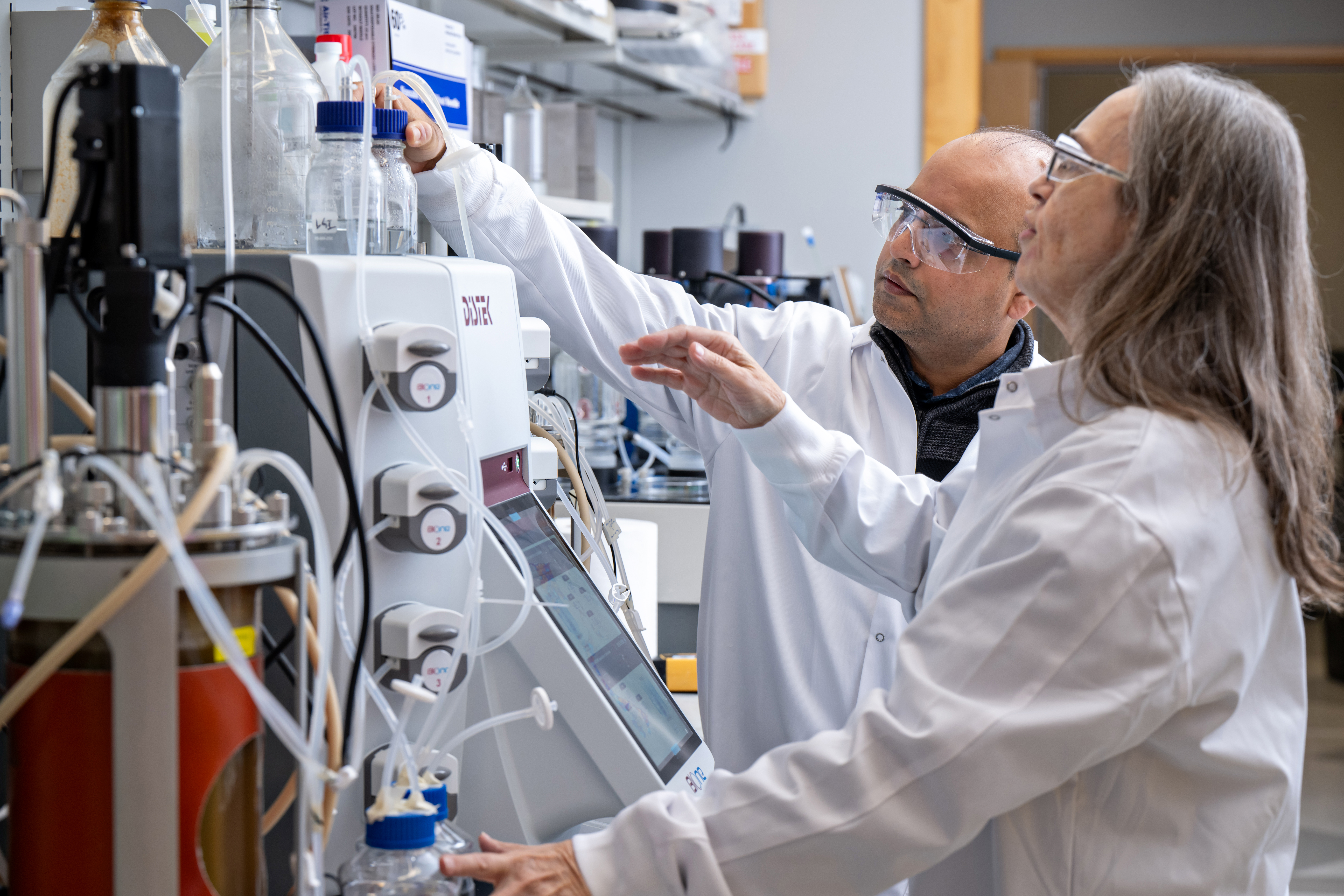
NPDC director Ashu Tripathi, Ph.D., and lab specialist Pam Schultz monitor fermentation processes for microbes in the Natural Products Discovery Core. Photo credit: Leisa Thompson, Michigan Photography
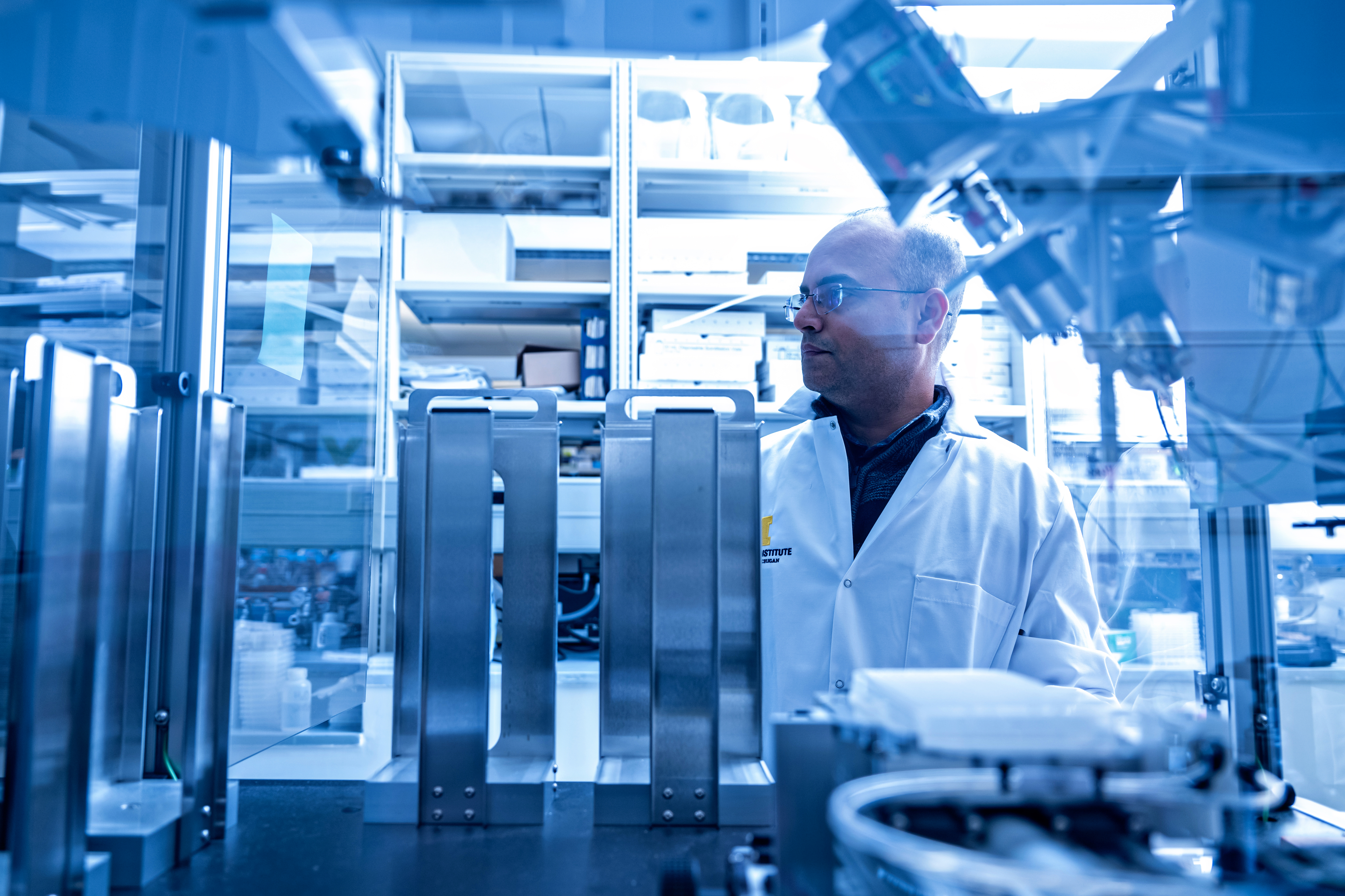
Ashu Tripathi, Ph.D., employs the NPDC’s high-throughput mass spectrometry to rapidly screen thousands of microbial molecules for interactions with protein targets. Photo credit: Leisa Thompson, Michigan Photography
“The fact that we already have molecules showing activity against our target is a testament to how nature can answer really challenging questions. A tough target like DIPG needs tough drug candidates, and that’s what the NPDC libraries can provide for a wide range of diseases and indications.”
“I knew we had world-renowned experts in this particular field of pediatric cancer here at the same university with this treasure trove of nature-evolved compounds that we can optimize to potentially target DIPG and other diseases that have not responded to synthetic compounds,” says Tripathi, who is also a research associate professor of medicinal chemistry in the College of Pharmacy. “So I reached out to see if we could take on this challenge.”
Tripathi and Prensner have now teamed up to search for potential leads toward a new drug for DIPG. Combining Prensner’s expertise in the underlying mechanisms of the disease and the NPDC’s expertise in natural products drug discovery, they will scan more than 20,000 extracts from bacteria and fungi in search of candidates that show activity against the histone gene mutation found in DIPG.
Because each of these extracts is a composite of multiple chemical compounds, it represents a quick way to test approximately half a million compounds.
“The question we’re trying to tackle is whether there are any molecules that microorganisms have figured out how to make, over their eons of evolution, that we could actually develop into a drug to help these kids with cancer,” Prensner said.
Preliminary data from the project has been promising, with a pilot screen identifying hundreds of potential leads. With new funding from Michigan Drug Discovery, the team is now refining the screening process and gathering data, which will then be validated to identify the most promising compounds for further development.
“The fact that we already have molecules showing activity against our target is a testament to how nature can answer really challenging questions,” Tripathi said. “A tough target like DIPG needs tough drug candidates, and that’s what the NPDC libraries can provide for a wide range of diseases and indications.”
Prensner added that the NPDC brings to the table not just expertise in natural products, but also specialized knowledge in how to design drugs.
“There aren’t a lot of places in the world that have such strength in both natural products drug discovery and pediatric diffuse midline gliomas,” he said. “That combination we have here lets take a truly cross-disciplinary approach to tackle a debilitating disease in novel ways.”
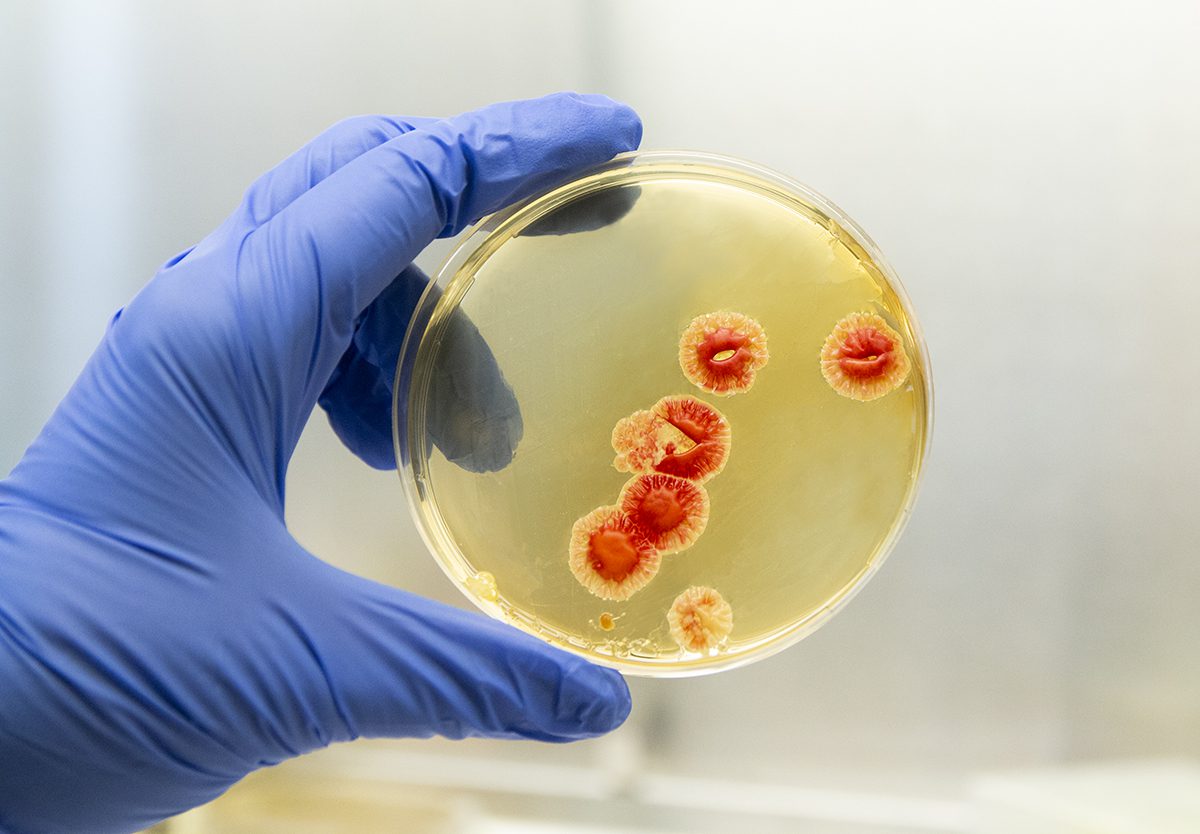
Microbes cultured in the U-M Natural Products Discovery Core, such as the Streptomyces roseoverticillatus shown here, have evolved to naturally produce chemical compounds with potential therapeutic, agricultural and industrial applications. Photo credit: Rajani Arora, U-M Life Sciences Institute.
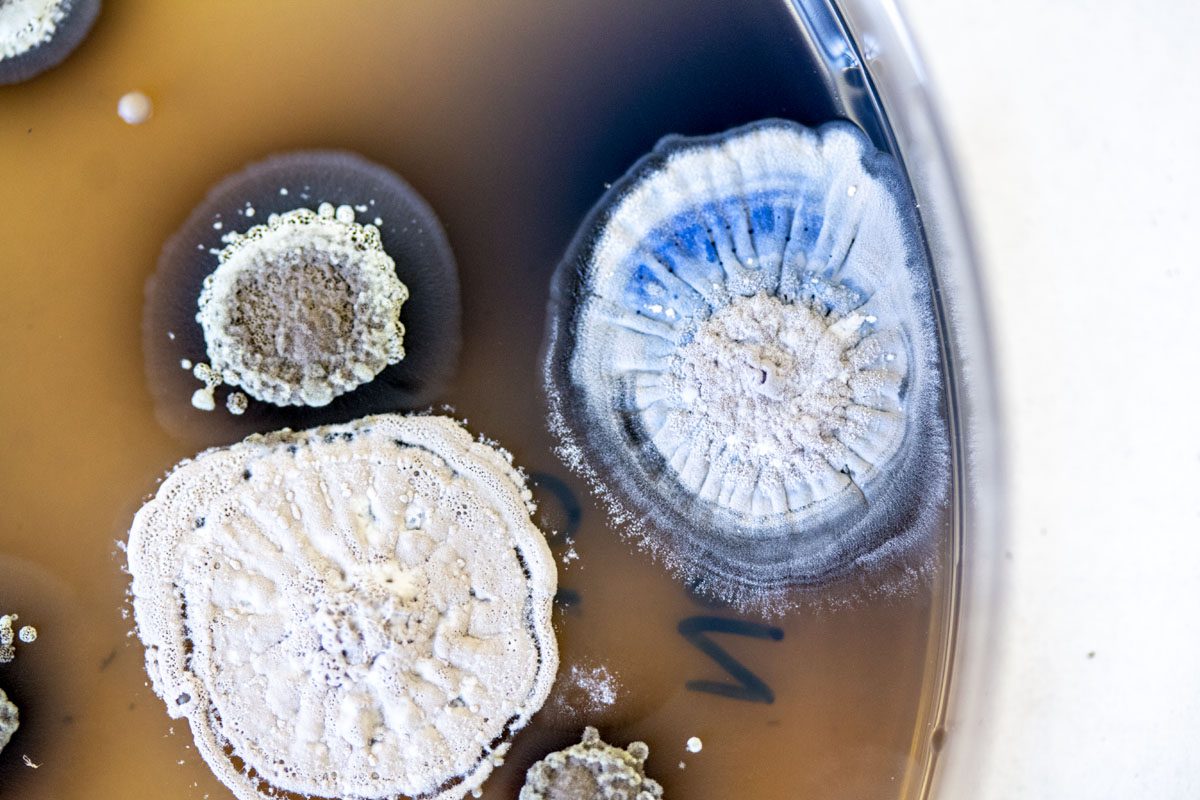
Cultured samples of microbes from lichen collected from Nepal by David Sherman, Ph.D., research professor at the LSI and professor in the College of Pharmacy, Medical School and LSA. Photo credit: Stephanie King, U-M Life Sciences Institute