Bringing Big Ideas to Life: Michigan’s Bold Challenges Initiative
By Kelsey Keeves
Research that takes on some of our world’s most pressing challenges requires collaboration across fields, resilient strategies and targeted support.
Bold Challenges – an Office of the Vice President for Research initiative – provides this support to University of Michigan faculty as they turn promising research into interdisciplinary projects that win major external funding awards and create impactful innovations that improve lives.
The Bold Challenges team works with U-M faculty as they collaborate across disciplines to develop novel solutions to complex issues. They have mentored over 70 U-M researcher teams and facilitated 50 workshops to support interdisciplinary projects. The initiative has supported projects across a wide range of areas, focused on solving some of the world’s greatest challenges, in areas ranging from agriculture and human health to next-generation infrastructure and transportation.
Since its launch in 2021, Bold Challenges teams have collectively secured over $42 million in research grants from funders like the National Institutes of Health, National Science Foundation, NASA and the Leducq Foundation.
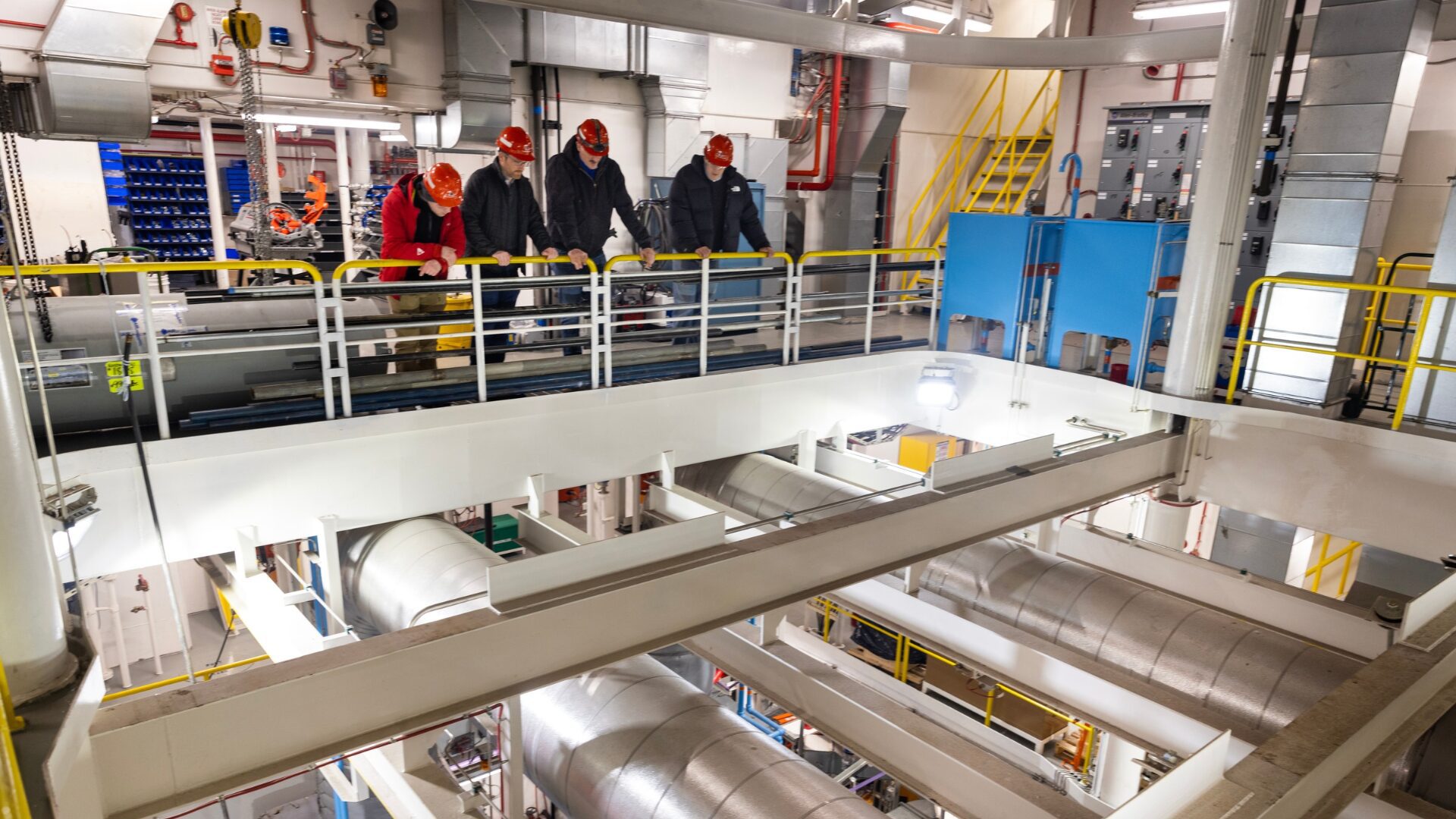
U-M professor Thomas McKenney (second left) and two NAME graduate students Logan Cox (first right) and Hal Berdichesky (first left) stand on a walkway overlooking ductwork and other equipment within the M/V Mark W. Barker, a commercial ship overwintering at the Nicholson Dock in River Rouge, MI.
Photo by Marcin Szczepanski/Lead Multimedia Producer, University of Michigan College of Engineering
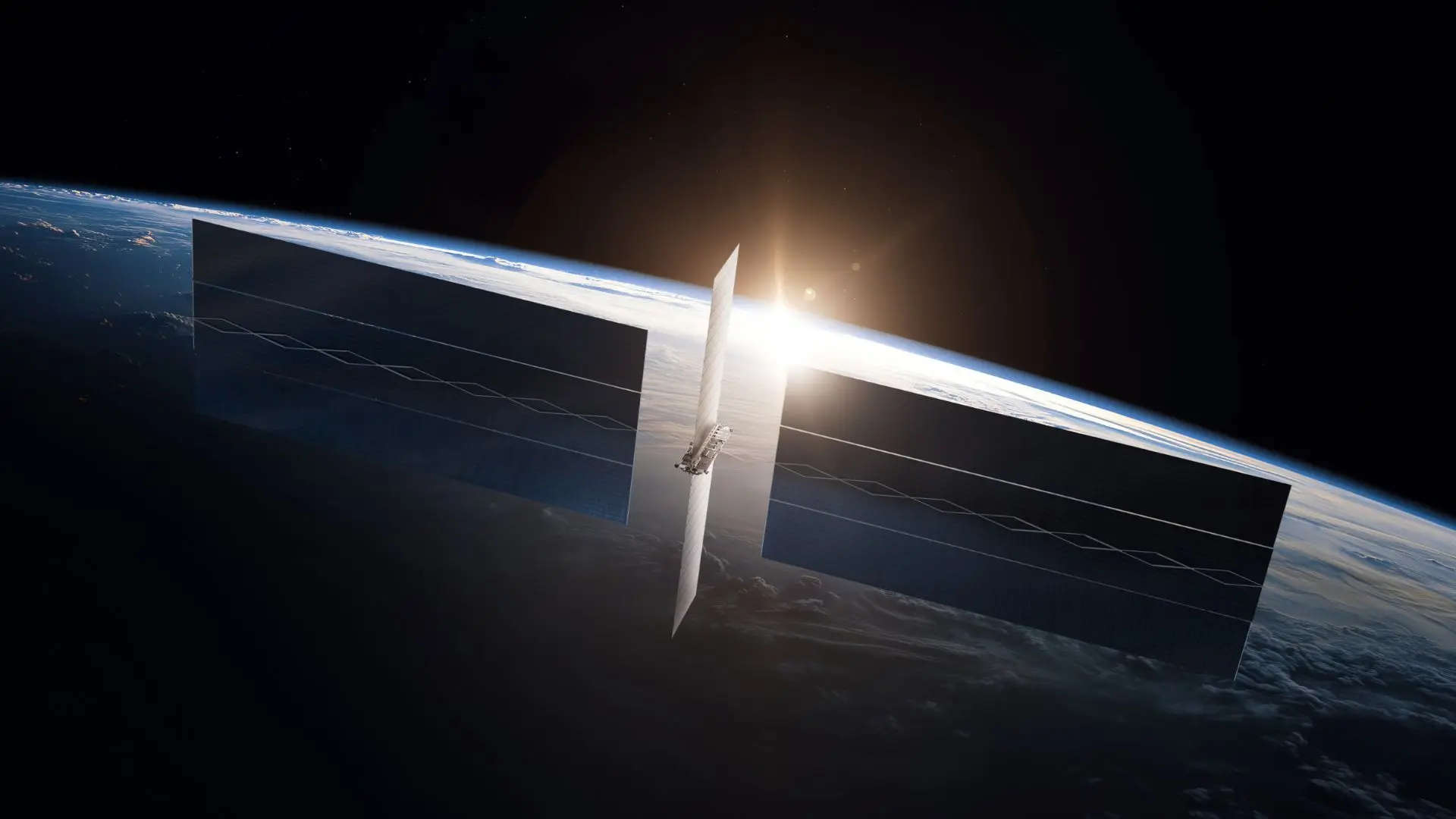
An illustration of a Starmind AI1 statellite – Photo Credit- SpaceX
The Bold Challenges initiative comprises three programs: Pollination, Boost and Accelerate.
Pollination networking events bring faculty from different disciplines together around a shared theme. Recent rounds tackled the themes of “Food for Tomorrow” and “AI and Manufacturing.” Beyond facilitating connections, Pollination offers seed grants and team support to kick-start new idea development. More than 250 researchers have attended the workshops, resulting in 35 early-stage collaborations.
Boost is a semester-long cohort program that helps emerging cross-disciplinary teams develop the strategy, communications and research plans needed to compete for large external awards. Newly formed research teams participate in a series of events designed to help them work together more effectively and craft compelling pitches for funding agencies. Boost teams have gone on to receive internal and external funding to continue their work.
Accelerate provides expert-guided consulting for teams finalizing major grant proposals, targeting large-scale, prestigious external grants. Teams are assigned a proposal manager and receive funding to strengthen their grant proposal. Accelerate teams have applied and been awarded a range of federal and foundation grants.
“U-M has some of the world’s leading faculty on a wide range of subjects, making us uniquely able to lead in tackling complex issues,” said Patricia Hurn, interim vice president for research and innovation. “The support offered by our Bold Challenges team accelerates the ability of our researchers to translate their groundbreaking efforts into life-changing impact.”
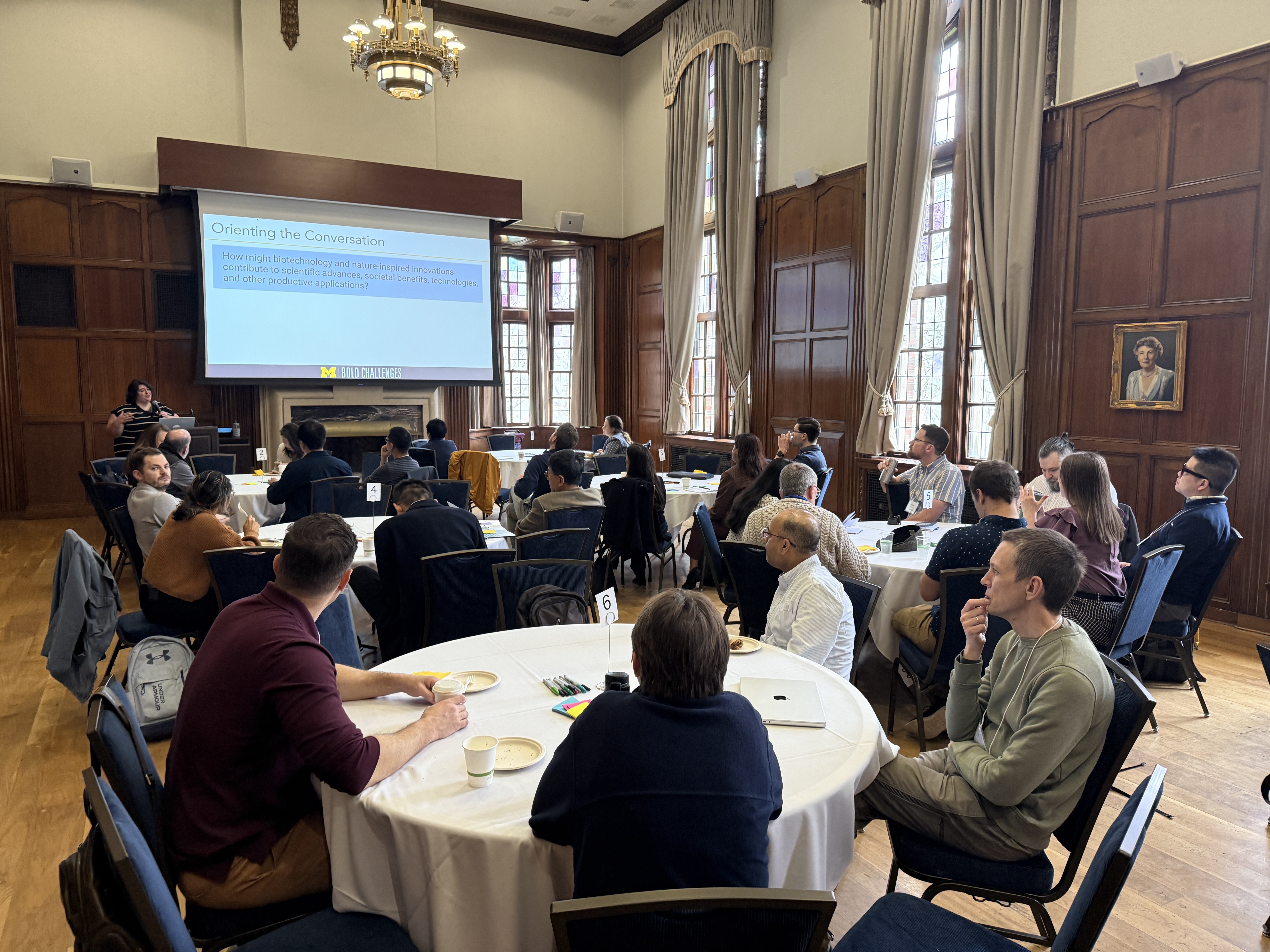
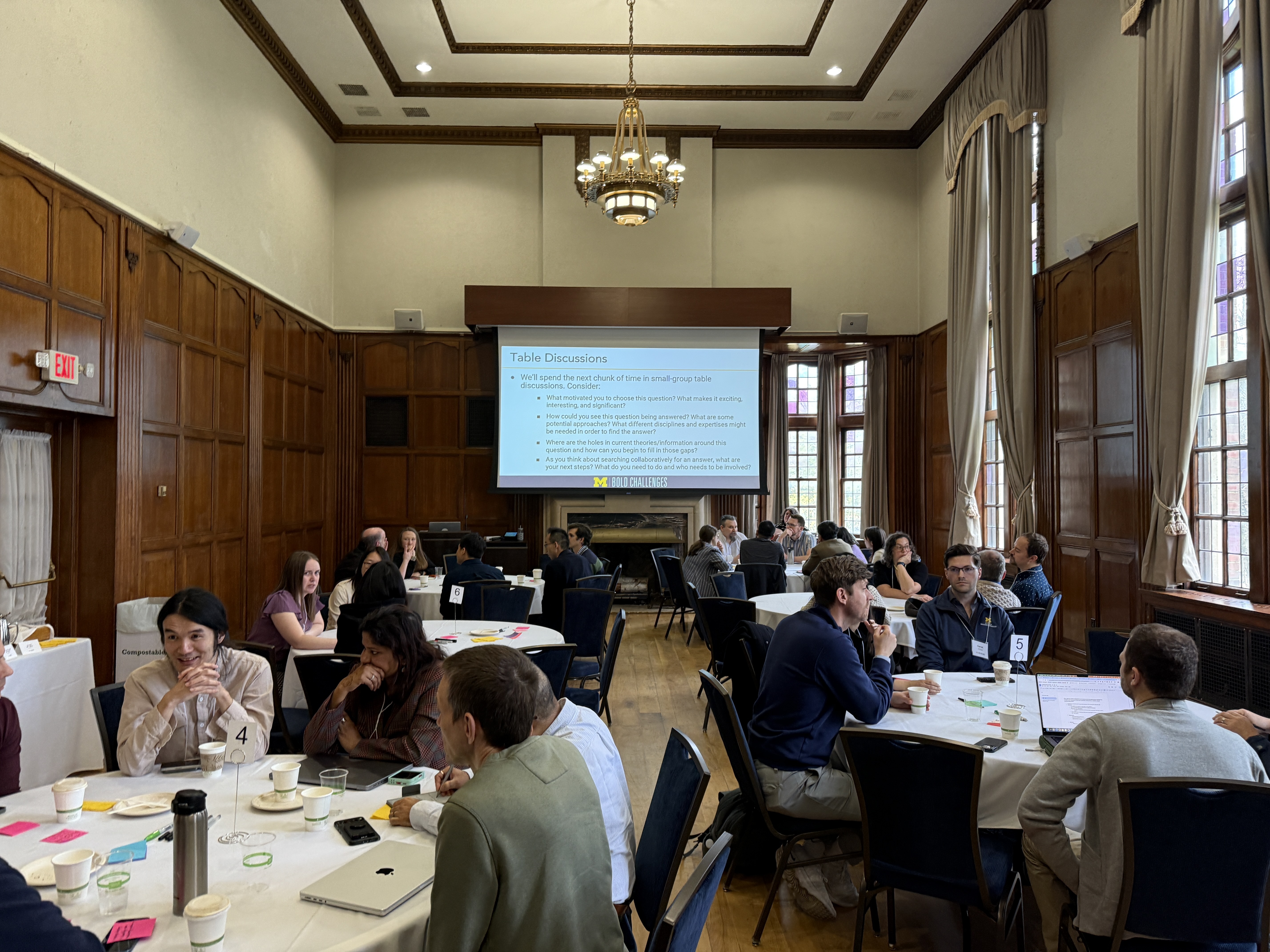
Researchers and Bold Challenges facilitators meet for the Biotechnology: Nature-Inspired Innovation Pollination Event in the Michigan League on April 17, 2026.