
Detroit’s digital divide meets its match in neighbors helping neighbors
By Eric Shaw
Office of the Vice President of Research
Martina Hinton-Jones tilted her laptop screen so Monique West could see the mockup of her company’s logo on a black T-shirt.
“I’m going to put that on everybody,” West grinned.
It was a Wednesday afternoon in mid-November at Detroit Sip, a coffee shop on the city’s north side. West had arrived unsure whether to accept an invitation to the table at an upcoming Black Tech Saturdays event. An hour later, she left with a plan for what to showcase, how to gather contact information from potential clients and design options for merchandise.
The conversation between the two Detroit natives was part pep talk, part marketing strategy session and part technical assistance with digital design tools. And it was free,one of roughly 300 such consultations that the University of Michigan’s Community Tech Consultants program has provided to Detroit small business owners since 2021.
The program, a collaboration between U-M researchers and Detroit nonprofit partners Jefferson East Inc. and Live6 Alliance, is producing peer-reviewed research on how to close the digital divide while actually closing it, one business at a time. Of the businesses served so far, 98% are Black-owned and about 70% are women-owned. Most become repeat clients, scheduling an average of five appointments each.
“The research shows that digital inequality is multidimensional,” said Tawanna Dillahunt, a professor of information at U-M and one of the program’s creators. “It’s not just what skills I have to use a computer, it’s also what access I have to technology. And there’s also this ability to translate my skills into meaningful outcomes.”
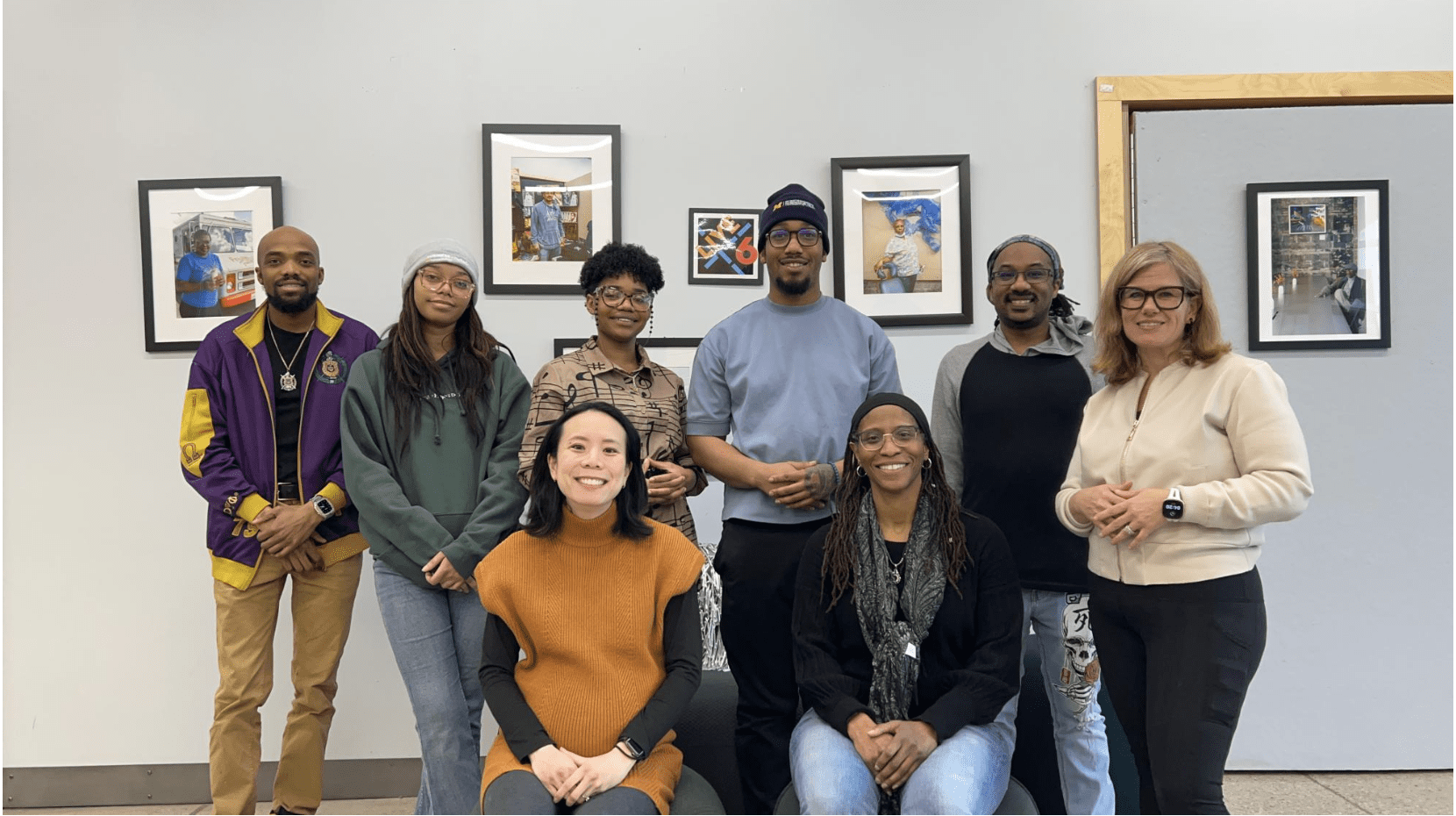
Juli Hui (front left), assistant professor of information at U-M; Tawanna Dillahunt (front center), professor of information at U-M; and Christie Baer (front right), managing director of the Detroit Neighborhood Entrepreneurs Project; gather with community tech consultants and staff from Live6 Alliance. (Photo provided by DNEP)
That translation is getting harder, not easier. As artificial intelligence reshapes how businesses operate, those without digital fluency risk falling further behind.
“AI is particularly important because the technology is changing so quickly that the divide is widening,” Dillahunt said. “It’s being amplified.”
The program draws inspiration from an unlikely source: community health workers. For decades, public health programs have trained trusted community members to serve as bridges between healthcare systems and the populations they serve. U-M researchers applied the same logic to technology, hiring and training Detroit residents alongside U-M students to become paid consultants who help local business owners navigate everything from social media strategy to point-of-sale systems.
The approach addresses a gap that traditional digital literacy programs often miss. Workshops and classes require business owners to find time in already-packed schedules, travel to training locations and learn at a pace set by instructors rather than their own needs. One-on-one support, delivered by someone who understands the realities of running a small business in Detroit, works differently.
“Some of these business owners are in a bubble. They’re focused on specific issues, and technology escapes out of their vision,” said Donovan Brown, one of the community tech consultants. “We have to educate people so they know they’re going to do this on their own, but we’re also assisting them so they’re not feeling alone.”
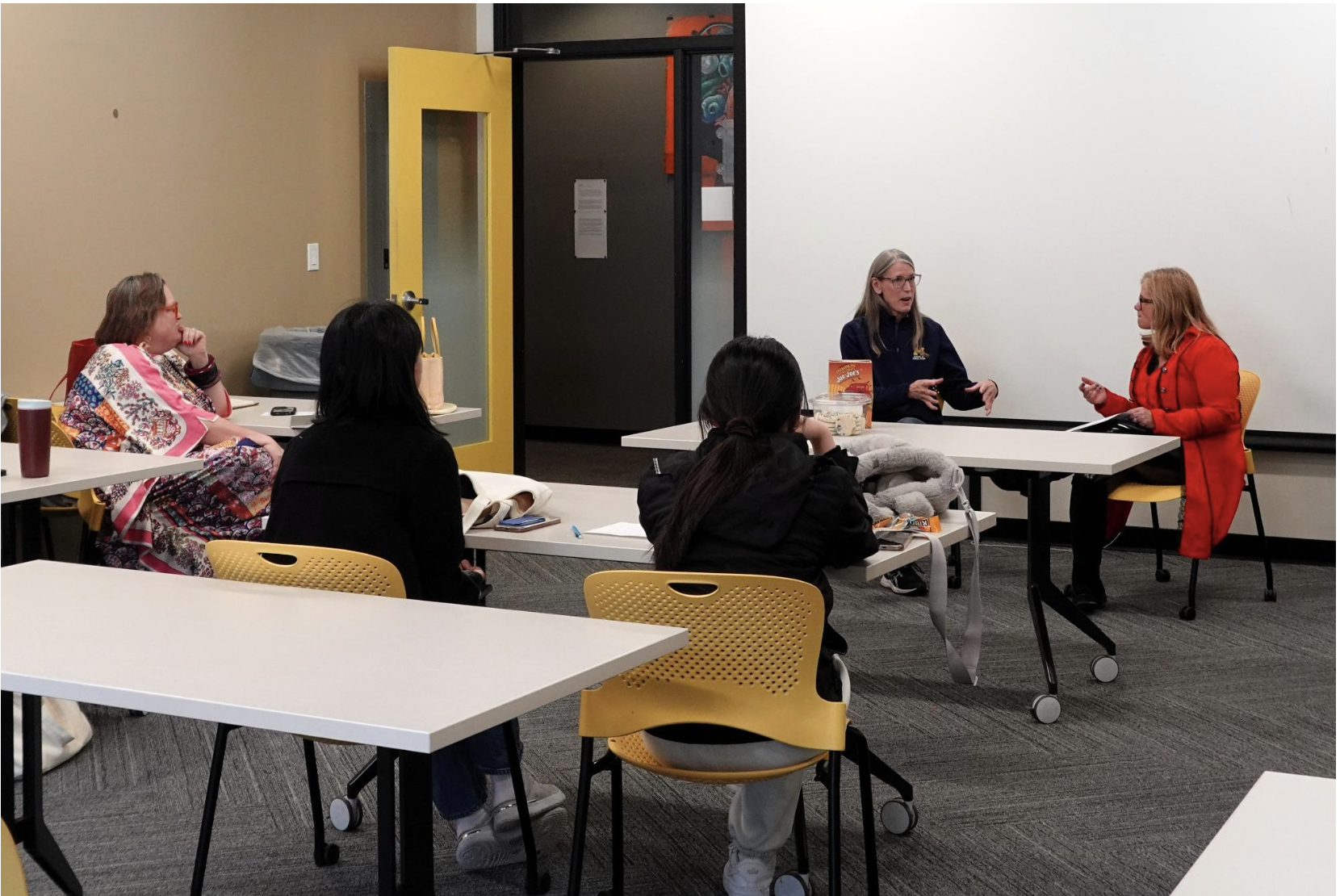
Kristin Seefeldt (front left) and Christie Baer (front right) model interview best practices at a training on Oct. 31, 2025, for tech consultants who will interview Detroit small business owners and recommend digital tools to address their business needs. (Poverty Solutions at U-M)
“The research shows that digital inequality is multidimensional. It’s not just what skills I have to use a computer, it’s also what access I have to technology. And there’s also this ability to translate my skills into meaningful outcomes.”
That emphasis on teaching rather than doing is central to the model. Consultants diagnose tech needs, research options, and then train owners to maintain tools themselves—websites, social media, search engine optimization, email systems, inventory software. The goal is building capacity.
U-M’s research on the program, published in peer-reviewed computer science venues, has identified three key benefits: helping businesses figure out where to start with technology, grounding support in the day-to-day realities of running a business and building caring relationships that foster trust in tech support services.
That trust matters because it stays in the community even after the formal program ends.
“There are always consultants that you can hire, but the value of this project is building the strengths and assets of the local community,” said Julie Hui, an assistant professor of information at U-M who studies how technology influences access to work. “Even if the whole process is a bit slower because it involves training somebody and building up all those relationships, the fact is the skills are not coming from an outside source. If we were to leave, the assets are still there.”
The program has also created pathways into technology careers for the consultants themselves. Some of the Detroit residents have moved into full-time digital navigator roles, and one student alum now works at Jefferson East Inc.
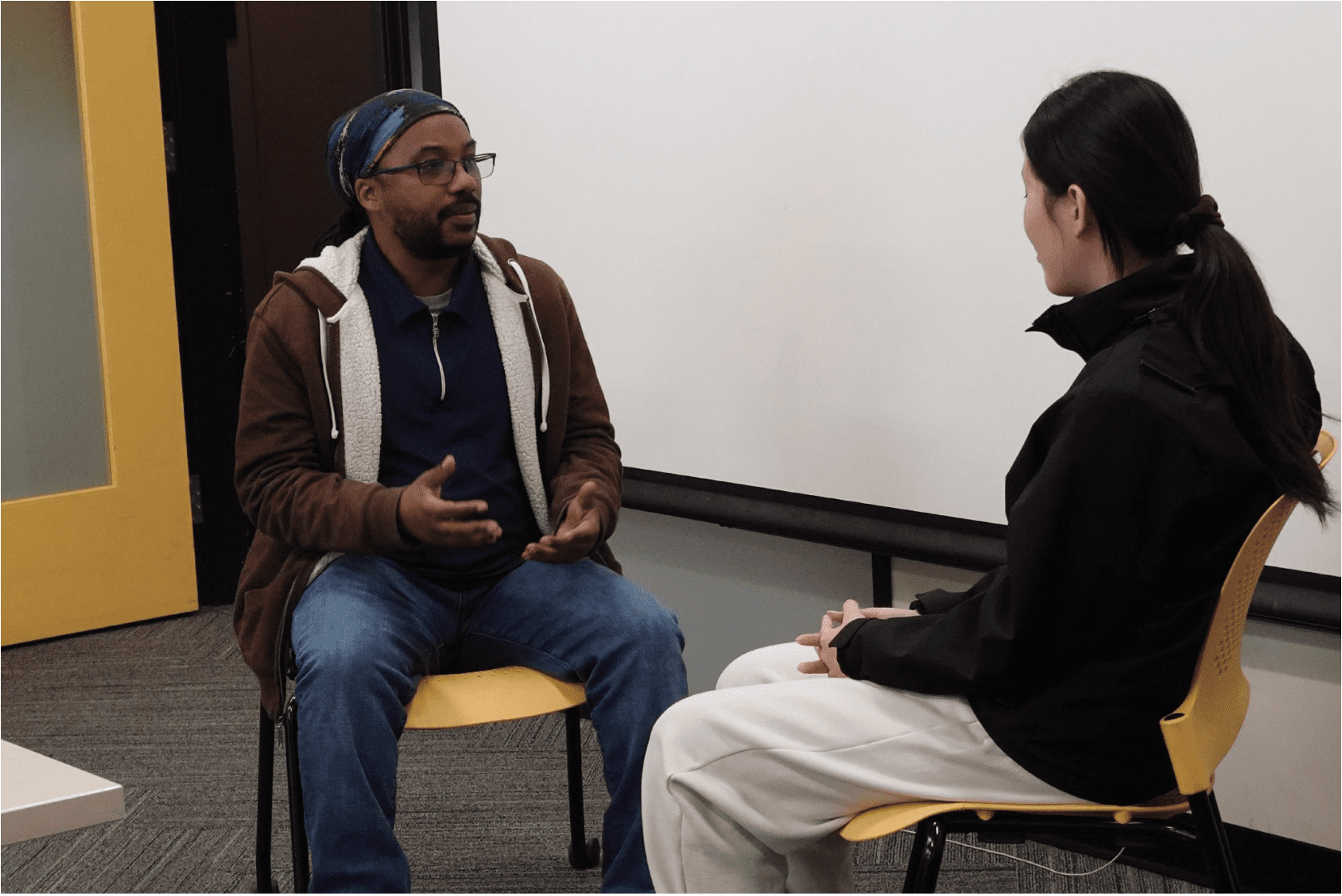
Community tech consultant Donovan Brown (left) works with a U-M student on client interviewing skills on Oct. 31, 2025. (Poverty Solutions at U-M)
“There are always consultants that you can hire, but the value of this project is building the strengths and assets of the local community. Even if the whole process is a bit slower because it involves training somebody and building up all those relationships, the fact is the skills are not coming from an outside source. If we were to leave, the assets are still there.”
For West, the STEAM education entrepreneur who met with Hinton-Jones at Detroit Sip, the consultations have helped her see how her varied work history—as an accountant, on the assembly line at General Motors, as a property manager—could come together in a technology-focused business that connects young people with robotics and other STEM resources.
“She’s helping me merge my gifts that I have all over the place and incorporate them into me,” West said of Hinton-Jones. “Because that’s what my business is—it’s me.”
The program’s funders include the National Science Foundation, the Ewing Marion Kauffman Foundation, the Kresge Foundation and New Economy Initiative. With a 2025 NSF grant, the research team is now assessing how to make the model replicable so that community development organizations, small business resource hubs and funders elsewhere can train community tech workers to serve their own communities.
Kristin Seefeldt, an associate professor of social work and director of Poverty Solutions at U-M who is involved in evaluating the community tech consultants program, sees applications far beyond small business support.
“High schoolers could be trained to work with younger students,” Seefeldt said. “Community tech consultants could be housed within community centers to offer assistance to their fellow residents. Senior housing facilities could be another place community tech consultants could work. This way, residents of all ages could have their digital skills bolstered in settings familiar to them.”
The full story of the Community Tech Consultants program, including video profiles of consultants, is available at the U-M Poverty Solutions website.