
Decoding Microplastics: Chemistry, Machine Learning and the Environment
By Kate Barnes
As a child, Anne McNeil was already passionate about the environment. She recycled, sought out opportunities to learn about sustainability and was interested in how living things interacted with their surroundings. She even had a series of books called “How to Save the Earth!”
As she entered her collegiate years, this passion led her to study chemistry – how molecules are structured, how they interact with each other and what that means for the world as we know it. Fueled by a curiosity about how chemistry impacts our environment, McNeil began to explore sustainability.
For the first decade or so of her career, McNeil examined materials known as conjugated polymers, which can be used for solar cells, among other electronic applications. As she progressed in her career, she became more interested in other sustainable topics like methods for recycling waste plastics, such as PVC, and the development of new chemically degradable plastics.
Over the years, McNeil noticed a need for chemists in environmental research areas to address pressing sustainability issues at the molecular level.
“My group was originally interested in developing and testing filters that remove microplastics from water. And though that work has been really important, I found myself drawn more to the question of quantifying and identifying microplastics in not only our water but also our air and soil. I wanted to know the full impact of these tiny pieces polluting essentially our entire environment.”
Enter microplastics.
By definition, microplastics are between 1 micron and 5 millimeters long and come from broken-down trash, car tires and synthetic clothes. Though plastics have been commercialized since the 1950s, microplastics have become a major topic of discussion in recent years as the research around them continues to expand, much of it concerning their near ubiquity in our modern world. In fact, studies have documented the presence of microplastics in 1,300 species, deep ocean trenches, Arctic snow and even in human tissues, blood and arteries.
As she got more involved in microplastic research, McNeil recognized the potential public health impacts of these tiny particles of plastic, and was drawn, initially, toward finding ways to reduce exposure.
“My group was originally interested in developing and testing filters that remove microplastics from water,” said McNeil, the Carol A. Fierke Collegiate Professor of Chemistry and Arthur F. Thurnau Professor in the U-M College of Literature, Science, and the Arts. “And though that work has been really important, I found myself drawn more to the question of quantifying and identifying microplastics in not only our water but also our air and soil. I wanted to know the full impact of these tiny pieces polluting essentially our entire environment.”
Through a $2 million grant from LSA’s Meet the Moment research initiative, McNeil initiated a collaborative project to explore how to accurately identify the amount and type of microplastics in Michigan’s air and where they are most concentrated. By identifying the chemical composition of the plastics, McNeil notes, we can better understand where they come from and how they will interact with humans, animals and our environment.
“Typically, microplastics research does not, or has not, included many chemists,” said McNeil, who also serves as a professor of environment in the U-M School for Environment And Sustainability. “We wanted to bring a different perspective and approach to improve the way microplastics were being analyzed so that any policy or strategy has a robust set of data as a base.”
Working with fellow LSA faculty member Andrew Ault, who is also a professor of chemistry, McNeil brought together a team of researchers that included Ambuj Tewari, Allison Steiner and Paul Zimmerman. Tewari is a professor of statistics in LSA and a professor of electrical engineering and computer science in the U-M College of Engineering; Steiner is the chair of the Department of Climate and Space Sciences and Engineering, a professor of climate and space sciences and engineering in the U-M College of engineering and a professor of earth and environmental sciences in LSA; and Zimmerman is a professor of chemistry in LSA.
The goal of merging chemistry, engineering and statistics? To utilize state-of-the-art instrumentation, machine learning and computational modeling to examine the smallest microplastics found in the atmosphere.
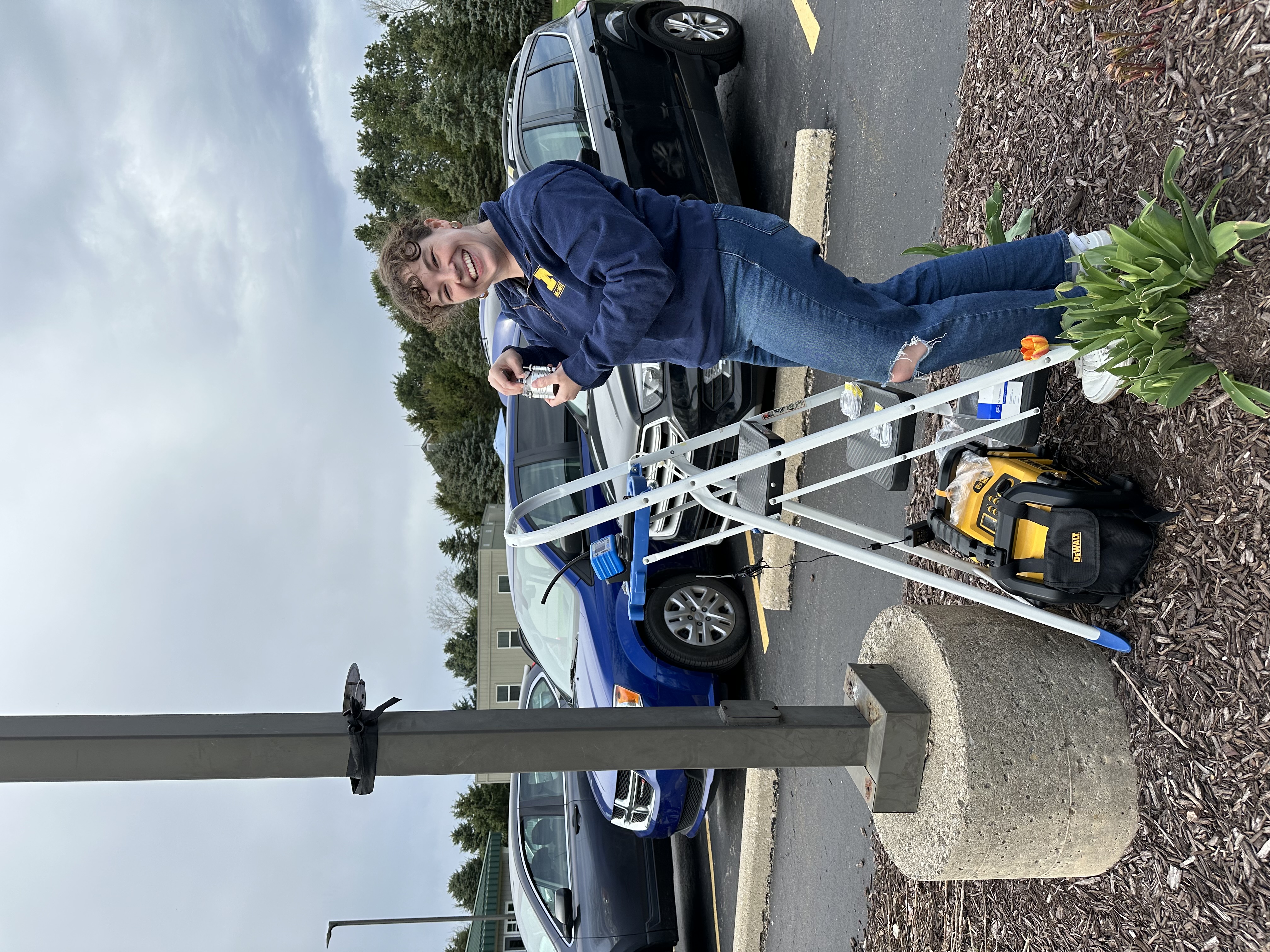
Dr. Maddie Clough (McNeil Group) doing sampling at Daycroft Montessori School.
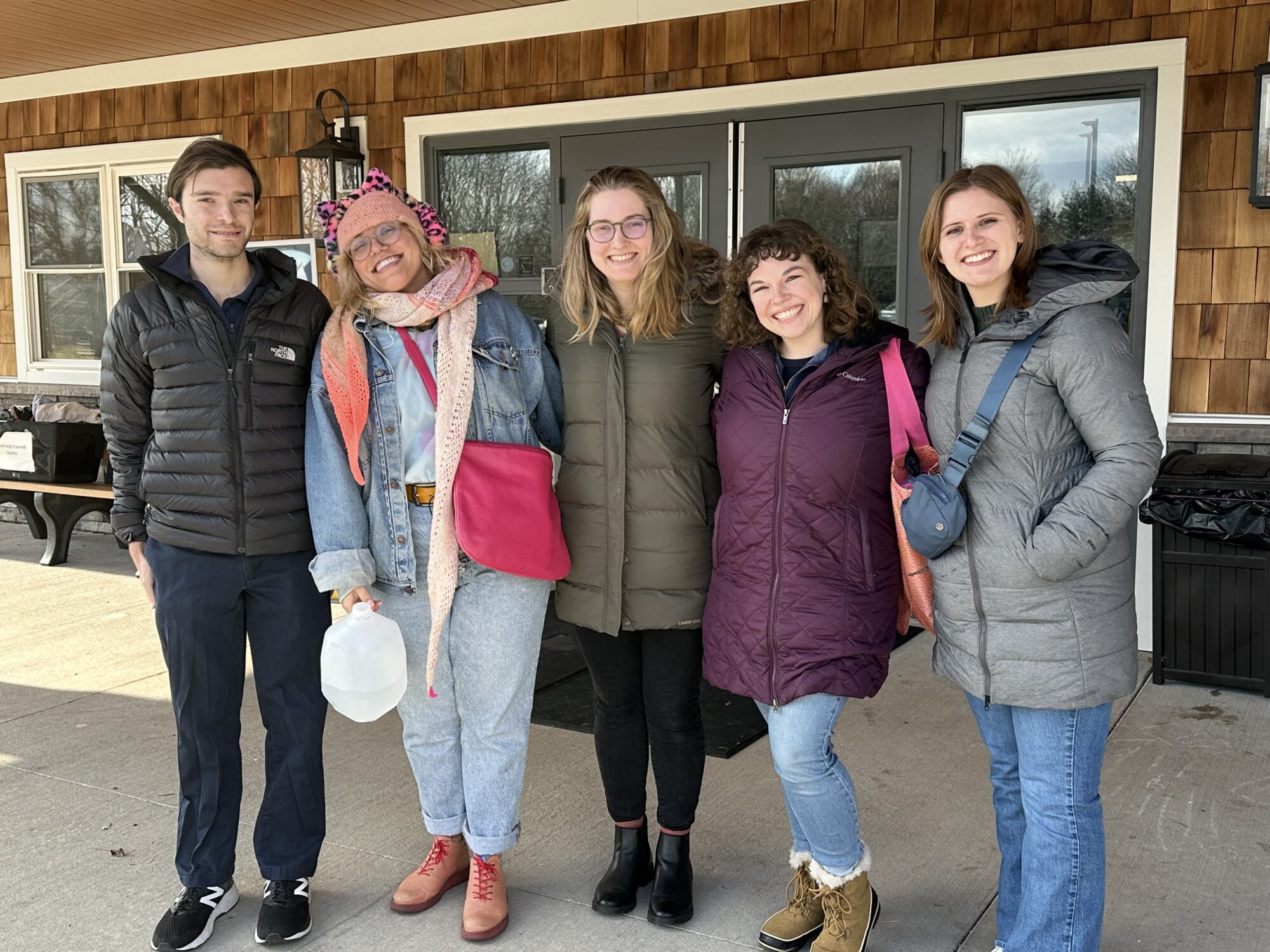
Joe Pennacchio, Scarlett Aguilar Martinez, Rebecca Parham, Maddie Clough, and Anna Schellin at Daycroft Montessori School
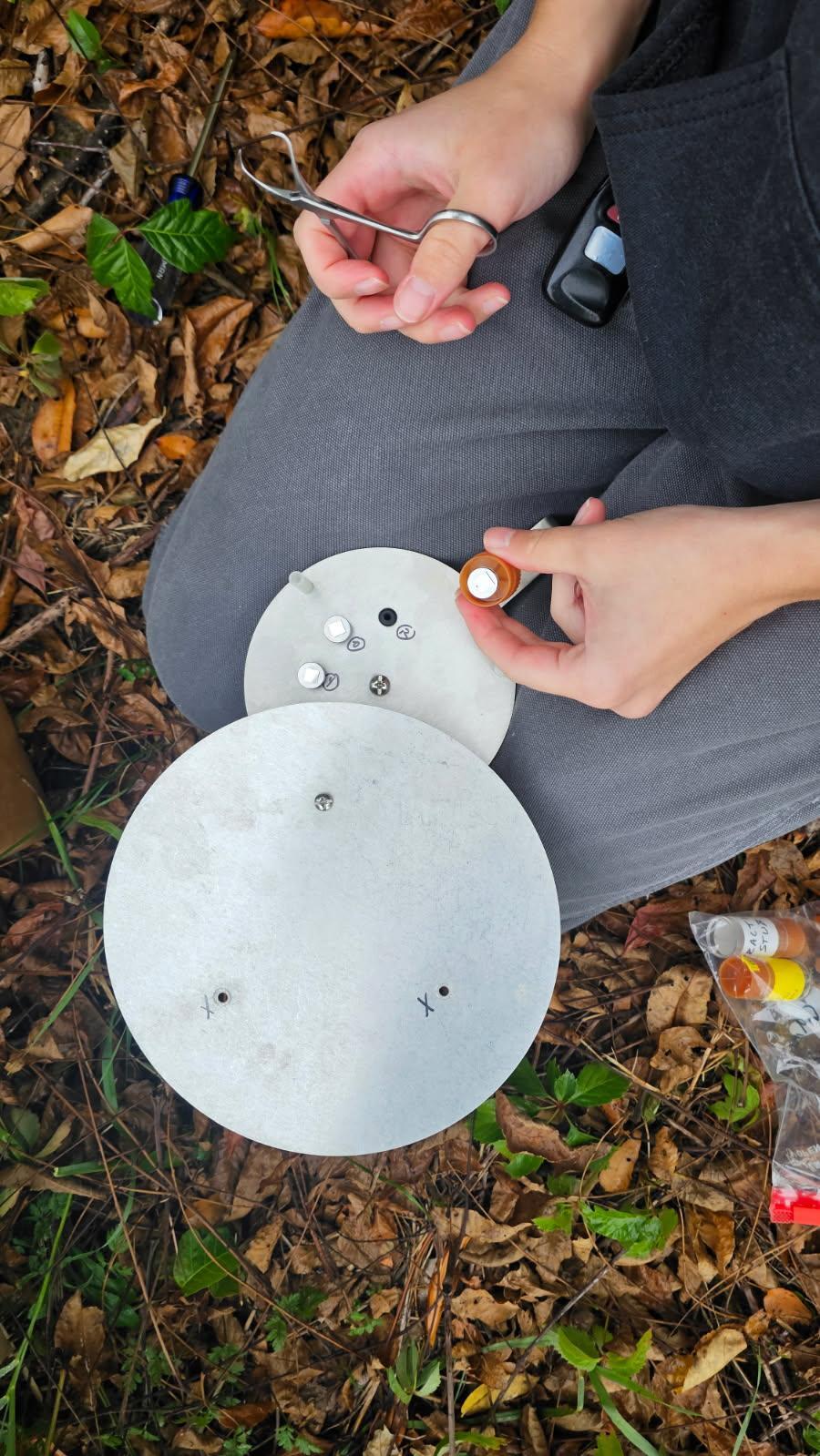
Abby Ayala sampling at a Dexter farm
Photographer: Randi Libin-Straud
Each lab brings different expertise. The McNeil and Ault labs have been collecting air samples across the state for analysis and using light, or spectroscopy, to identify particles in microplastics; the Tewari lab is building a system that can model hundreds of these spectra; the Zimmerman lab is developing a faster spectral labeling approach and the Steiner lab is modeling potential sources of atmospheric microplastics and how they move across the state.
Together, the teams are working to better identify if a particle is even plastic, and if it is, what kind of plastic. This collaborative approach also allows the researchers to train their machine learning tool on new and evolving particles. This is critical as it allows improved identification and confirmation of microplastics’ makeup as their composition changes over time.
This multidisciplinary approach is critical to determining where the plastics came from and their potential health impacts, and can help guide and develop standardized global regulations.
“This has really been a collaborative effort and I am so grateful to my colleagues for their partnership”, McNeil said. “Being at a public institution like U-M means we are charged with serving the public good, and this work really is about that. And this project really highlights that when collaborations work well, really impactful things can happen.”
While the U-M team is encouraged by their progress in each area, McNeil notes the field of microplastics is at a sort of tipping point.
“We are seeing a lot of papers being published on microplastics, but unfortunately, the data and associated science is still catching up, so the methods are coming into question,” McNeil said. “Our team is really focused on trying to help fill the gaps. All of our models, data and methods are open source – we want to make the information we have (and are discovering) free and accessible to really encourage and ensure good science across the field.”
McNeil notes that by bringing the field together, researchers can establish and implement standardized quality control measures for data collection, sample handling and data processing, as well as information-sharing best practices, ultimately making the broadest possible impact.