
NASA
NASA partners with researchers across U-M to discover and expand knowledge for the benefit of humanity, while supporting innovation and technology development to advance our space exploration capabilities.

$32 Million
Research Supported by NASA in FY25

416
Active Projects Supported by NASA
A discovery made by a team led by researchers at the University of Michigan tugs at the seams of some key cosmic lessons we thought we had learned from our own galaxy. This new knowledge comes from the outskirts of Andromeda, the Milky Way’s nearest major galactic neighbor, where astronomers have found the system’s smallest and dimmest satellite galaxy to date.
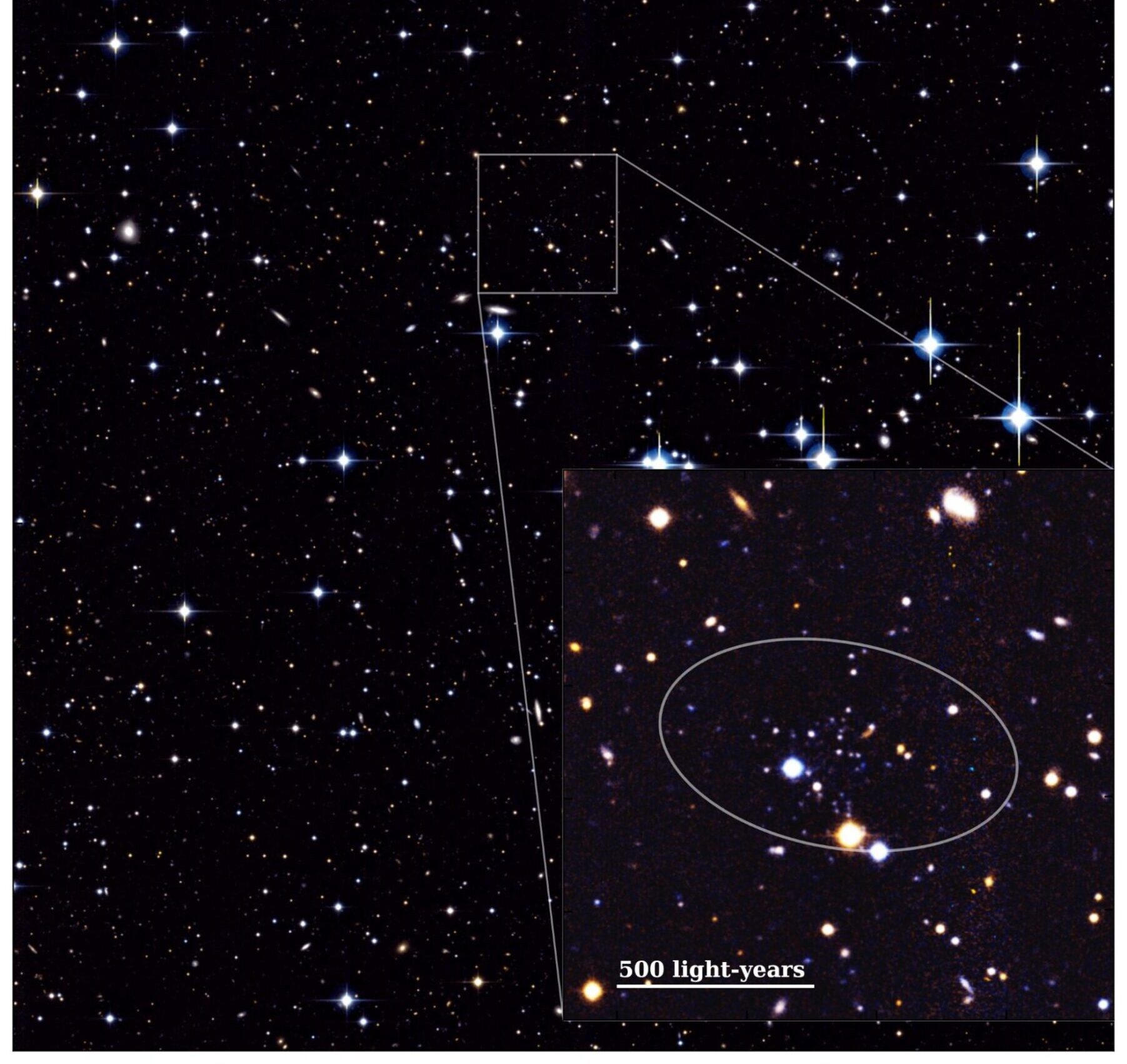
Andromeda XXXV, the dimmest and smallest known satellite galaxy in the Andromeda system, is about 3 million light-years away. The ellipse within the inset shows where this companion galaxy was discovered.
Image credit: CFHT/MegaCam/PAndAS (Principal investigator: Alan W. McConnachie; Image Processing: Marcos Arias)
Using NASA’s James Webb Space Telescope, or JWST, a team of researchers, including astronomers from the University of Michigan, are probing the Flame Nebula and finding out what’s the smallest celestial body that can form on its own from clouds of gas and dust in space.
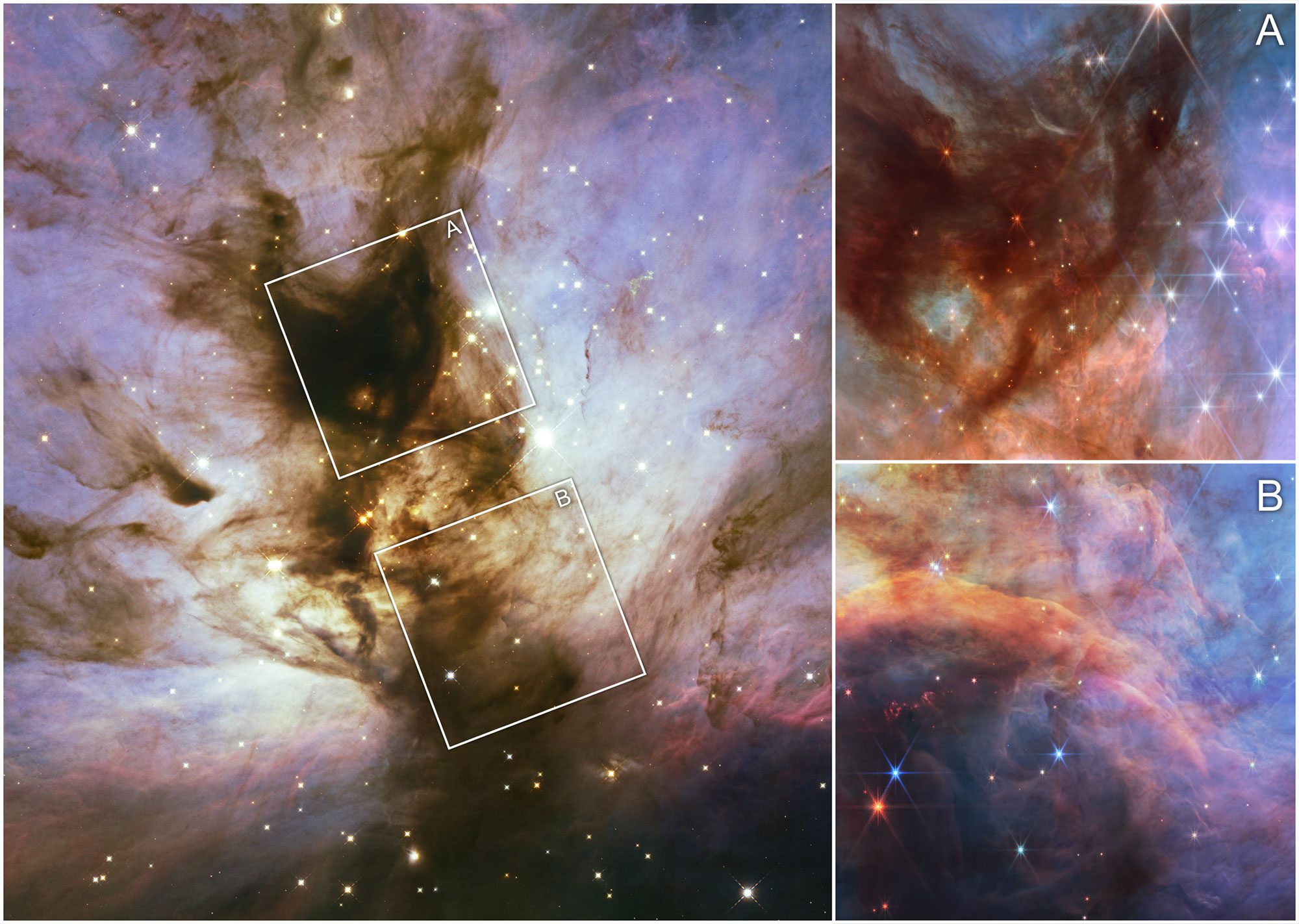
This collage of images from the Flame Nebula shows a visible light view from NASA’s Hubble Space Telescope on the left, while the two insets at the right show the near-infrared view taken by NASA’s James Webb Space Telescope.
The first space mission led by the University of Michigan Department of Astronomy is scheduled to launch in 2029 with the support of a NASA grant worth $10 million. The mission is called STARI—STarlight Acquisition and Reflection toward Interferometry—and will showcase the viability of a new technique for studying exoplanets, or planets outside of our solar system.
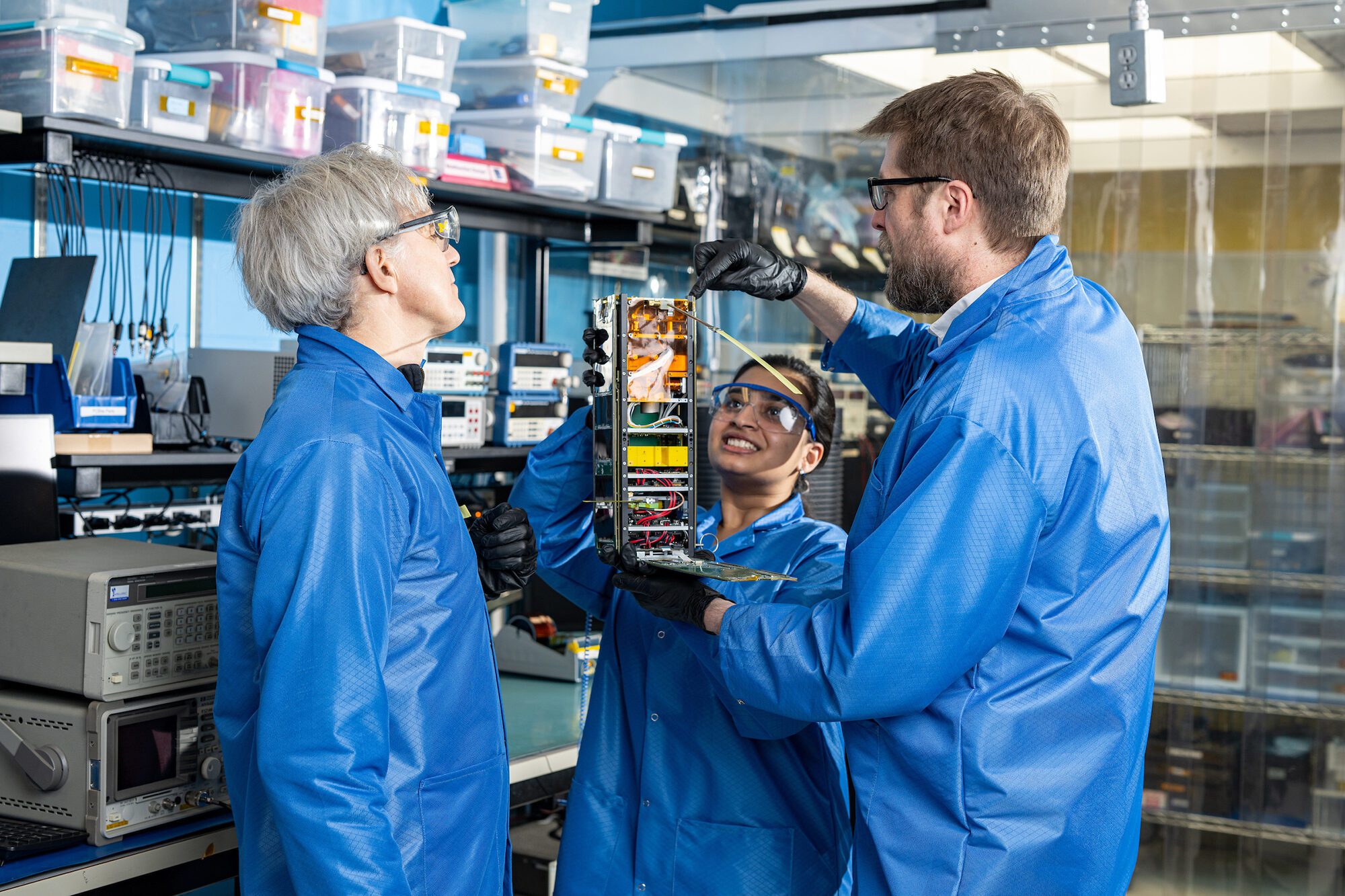
University of Michigan researchers John Monnier (left), Shivani Sunil (center) and James Cutler (right) examine a CubeSat in the Michigan Exploration Laboratory. The team’s STARI mission will use two CubeSats that are each twice the size of the one shown here.
Image credit: Michigan Photography