
Michigan Research
May 2026May is Mental Health Awareness Month, and this edition of Michigan Research looks at how University of Michigan researchers are applying what we know about mental health to improve the care that reaches people.
Explore this edition featuring COMPASS, U-M’s $17.9 million effort to bring precision to depression treatment; the case for why mental health science must shape how AI gets built; and community-led suicide prevention in National Guard units and Alaska Native villages.
What’s on This Page
The COMPASS approach: Charting a faster path to effective mental health care
Video by Eric Shaw and story by Don Jordan
For many people seeking mental health care, the wait to get an appointment can be long. As part of a $17.9 million study, U-M researchers are using wearables, genetics and survey data to more quickly provide patients with the help they need.
Read how the COMPASS Study is turning the waiting time into part of the treatment.
AI and mental health: Promises and peril
By Stephan F. Taylor, MD
Daniel E Offutt III Professor of Psychiatry, Professor of Psychiatry and Chair
Department of Psychiatry
Most discussions of AI in mental health treat it as a future problem. Psychiatry Chair Stephan Taylor argues we’re past that point: nearly half of adults with mental health conditions already use chatbots for support, and clinicians are seeing what follows.
Read why mental health science must shape AI, not just react to it.
Daphne C. Watkins on designing health care that meets the moment
By Kelsey Keeves
Young Black men aren’t avoiding help. They’re avoiding systems that were never built for them. So Daphne Watkins built one that was: a private social media group where young men talk about depression, masculinity and the pressures shaping their lives.
Read the Q&A on designing mental health care that the people who need it most will actually use.

Impact stories: Research at the University of Michigan

The power of reaching out: Evolving approaches to suicide prevention
Suicidal thoughts come in waves that peak then pass. Clinical psychologist Mark Ilgen built a single-session intervention around that fact: practice the phone call before you need to make it. Read how Ilgen’s team learned that the call itself is the intervention.
By Kate Barnes
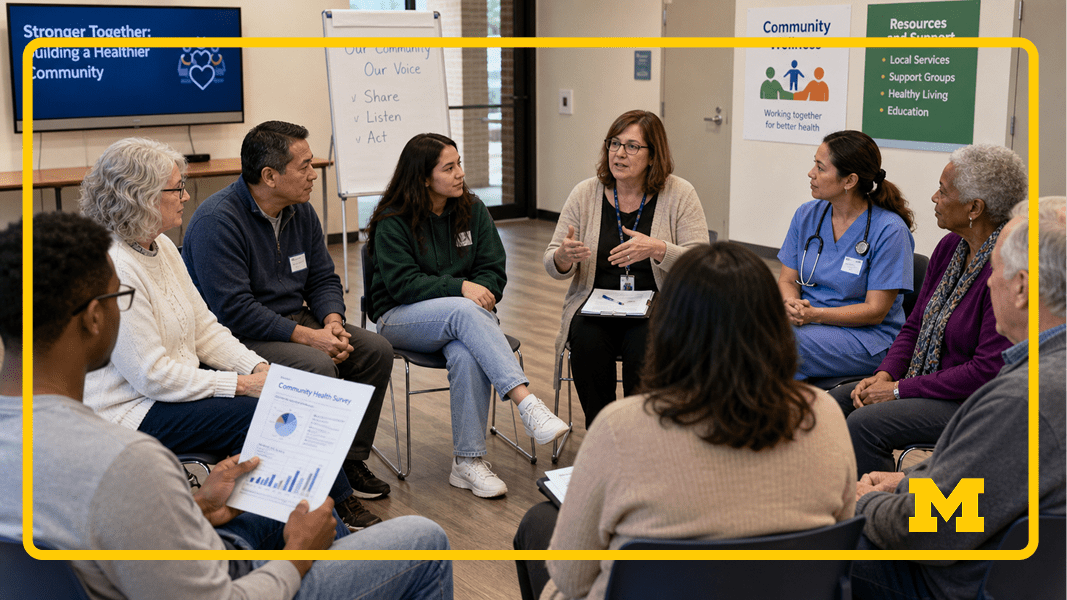
From Alaska to Michigan: Translating research into practical community tools
Scare tactics don’t stop substance use or suicide. Lisa Wexler built learning circles where elders, clergy and law enforcement read research in bite-sized pieces and design their own community response. Read how a model built with Alaska Native partners is now expanding across Michigan.
By Jen DeBord
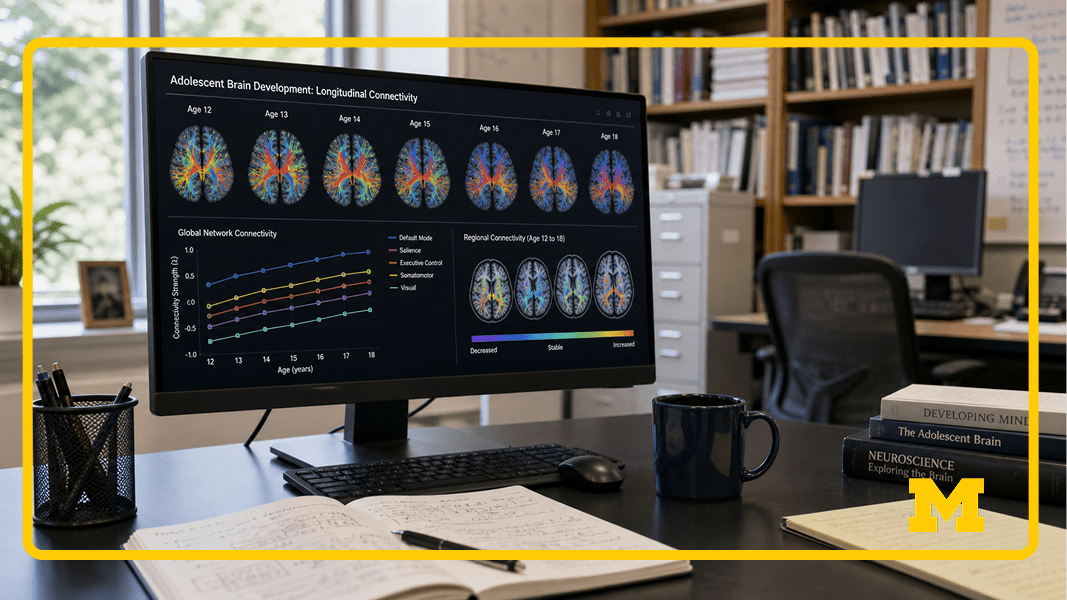
Tracking the developing brain from childhood to adulthood
The country’s largest brain development study recruited nearly 12,000 children a decade ago. They’re now entering the years when most mental health conditions emerge, with U-M among the 21 tracking sites. Read why researchers say the most important phase of the study is just beginning.
By Vanessa Vinson
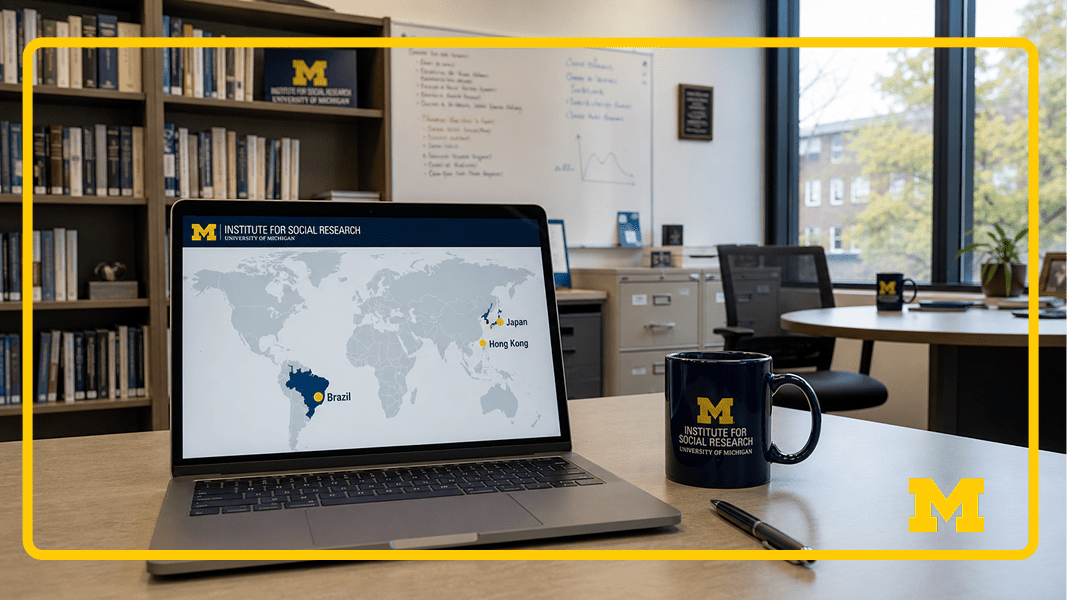
Global mental health data initiative finds new home at U-M
Most mental health surveys only reach people already in treatment. The World Mental Health surveys reach everyone: 150,000 people in 30 countries. The consortium just moved from Harvard to U-M. Read what the move means for the next phase of global mental health measurement.
By Kelsey Keeves

Inside the nation’s largest study of college student mental health
Most students don’t stigmatize therapy. They just think their classmates do. The Healthy Minds Study at U-M surveys more than 70,000 college students nationwide each year to close that gap. Read how nearly two decades of data is helping colleges support student mental health.
By Kelsey Keeves
About Michigan Research
Michigan Research is the University of Michigan’s flagship monthly e-newsletter, produced by the Office of the Vice President for Research. Each edition spotlights groundbreaking U-M research and scholarship that addresses critical challenges, sparks innovation and shapes the future across a range of disciplines.