
Michigan Research
June 2026Discovery is only half the work. From scientists working across universities and federal agencies to better protect the Great Lakes, to a system that turns U-M lab discoveries into companies, this edition of Michigan Research is about the connections — between universities and agencies, labs and companies, archives and the public — that turn knowledge into something the world can actually use.
Explore this edition featuring the partnerships and pipelines reshaping how research reaches people — including a brain-modeling effort tracing the navigation cells that fail in Alzheimer’s, an algorithm that reveals the hidden conversations between individual cells, and a project opening 150 years of U-M dissertations to 2.3 million readers across 200 countries.
What’s on This Page
Better Great Lakes forecasts: U-M and NOAA pair AI with human judgment
The forecasts that guide life on the Great Lakes—water-quality alerts, navigation, algal bloom warnings—are only as good as the science behind them. Through a five-year, $53 million NOAA partnership, U-M and federal scientists are training the next generation to forecast the lakes with human judgment at the center.
Read how a federal-academic partnership is grounding Great Lakes AI in real science.
Accelerating Impact: The Michigan Model in Action
By Kelly Sexton, Ph.D.
Associate Vice President for Research – Innovation Partnerships and Economic Impact
University of Michigan
U-M researchers produce life-changing discoveries every day—but brilliant science doesn’t reach the world on its own. Kelly Sexton lays out how Michigan deliberately bridges that gap, from a focused-ultrasound startup that has treated 4,000+ patients to chips born of federal research now running in 270 million devices.
Read how the Michigan Model turns university research into real-world impact.

U-M research spending generates $164M for Michigan businesses
By Vanessa Vinson
Federal research funding doesn’t stay on campus. In 2025, U-M’s federal grants sent more than $164 million to Michigan businesses—and supported over 16,000 jobs—as researchers bought the equipment, built the partnerships and trained the teams their work depends on.
Read how federal research dollars ripple across Michigan’s economy.

Sharing Michigan Research with the World
By Truly Render
Rackham Graduate School

U-M holds about 47,000 dissertations—but only half are fully readable by the public. The Unlocking Dissertations Project, a Library and Rackham partnership, is opening 150 years of scholarship that already reaches 2.3 million people across 200 countries.
Impact Stories: Research at Michigan
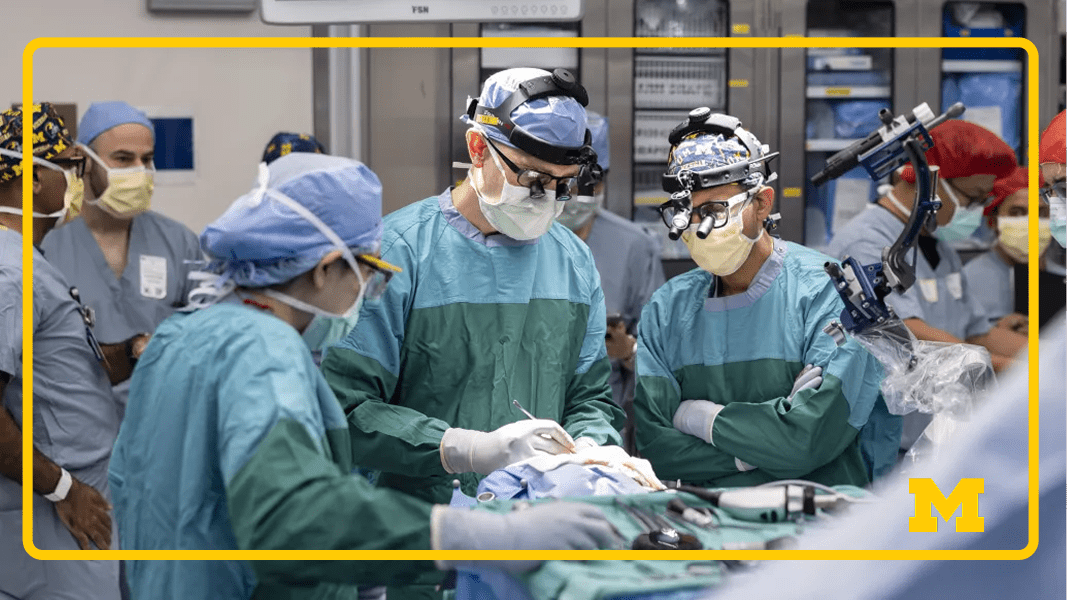
University of Michigan implants first-in-human Paradromics wireless brain-computer interface, designed to restore communication
When motor neuron disease takes away speech, it doesn’t take away the words. U-M neurosurgeons implanted a wireless brain-computer interface—421 microelectrodes reading single neurons—designed to turn a participant’s thoughts back into text and speech.
By Noah Fromson
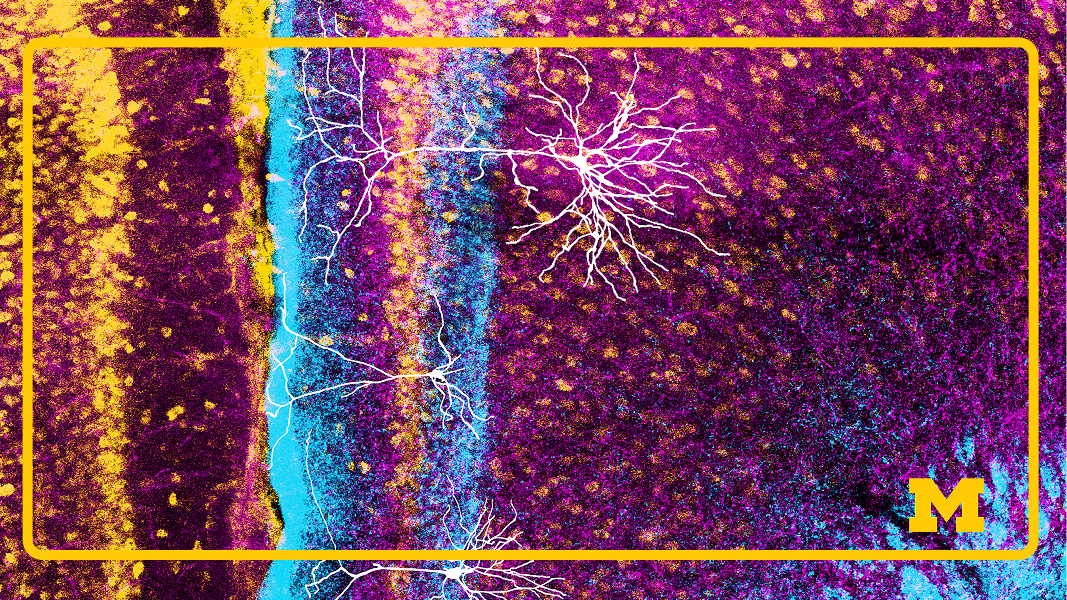
Finding their way home: How brain modeling could help Alzheimer’s patients
When Alzheimer’s makes a familiar street unknowable, the breakdown is in the brain’s navigation system. Omar Ahmed is modeling how that system works—and testing whether psychedelics can rebuild the lost connections. Read how brain modeling could help patients find their way home.
By Wendy Sutton
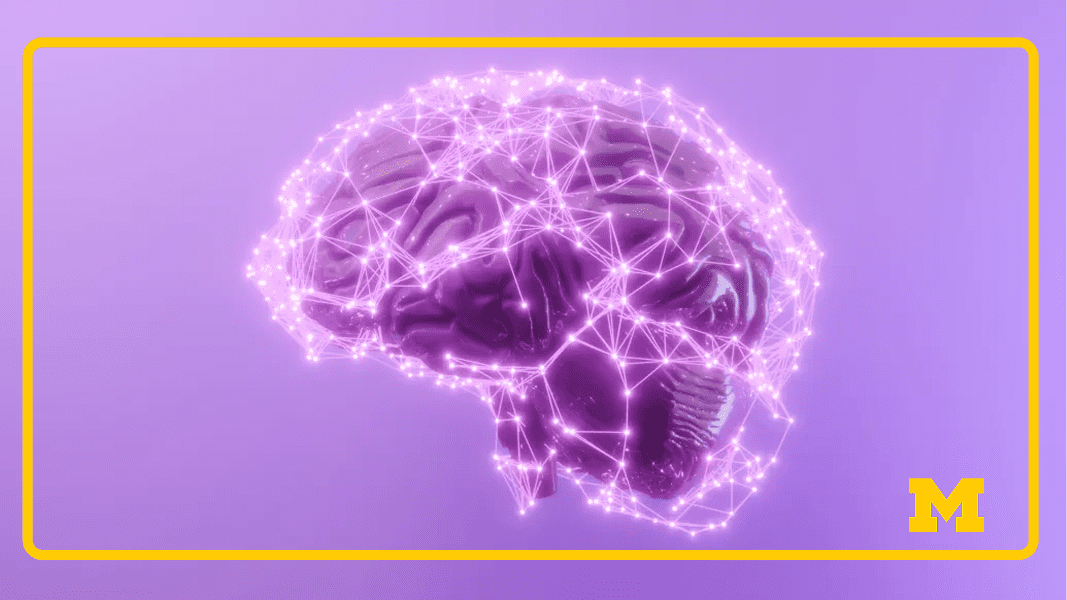
New algorithmic tool enables scientists to see cells “talk” to one another
Cells constantly signal each other to coordinate growth and decide their fate—but tracing which cell talks to which has been nearly impossible. A U-M team built CytoSignal, an algorithm that maps those conversations and could reveal the faulty signals behind disease.
By Kelly Malcom
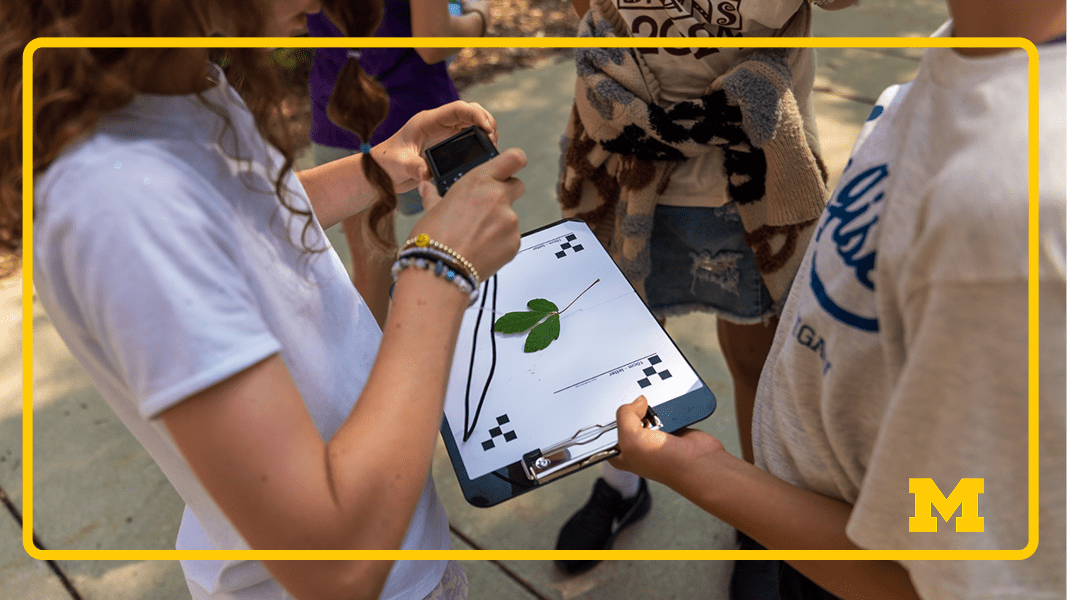
Mapping the evolutionary tree of life
Biology’s open secret: we don’t really know how evolution’s big leaps happen—one giant step or many small ones. Stephen Smith mines thousands of plant species computationally to find out, with answers that reach from conservation to antibiotic resistance. Read how he’s mapping the tree of life.
By Wendy Sutton
About Michigan Research
Michigan Research is the University of Michigan’s flagship monthly e-newsletter, produced by the Office of the Vice President for Research. Each edition spotlights groundbreaking U-M research and scholarship that addresses critical challenges, sparks innovation and shapes the future across a range of disciplines.