

Removing the Isolation of Disability
By Wendy Sutton, Office of the Vice President for Research
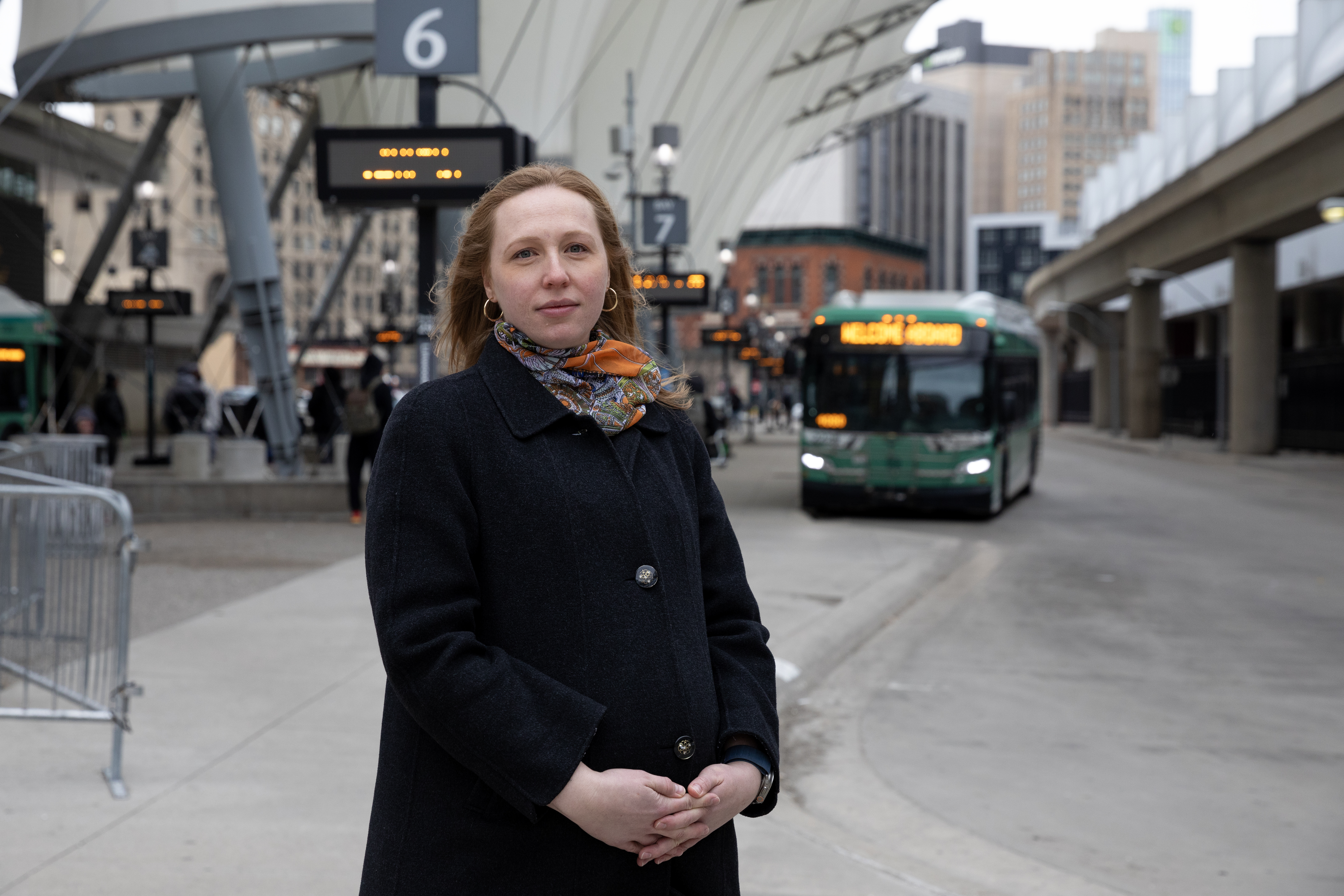
All images in this article are provided by photographer Elaine Cromie
Growing up in Copper Harbor on Michigan’s Keweenaw Peninsula, Erica Twardzik knew isolation. Renowned for its mining history and rugged beauty, the Upper Peninsula (UP) is defined by its remoteness. A trip to a health clinic required a 30-minute to one-hour drive, while specialty care demanded a three-hour journey. As a high school athlete, Twardzik endured six-hour bus rides for volleyball matches. With limited transportation options, those without a car or the ability to drive faced significant barriers. This geographic isolation shaped her worldview, fostering understanding for those disconnected from the world around them, not because of disability itself, but because of inaccessible environments.
“The upper peninsula is very remote,” Twardzik said. “Its extreme winter conditions demand resilience and adaptability. The disability community does that beautifully every single day, navigating a world not designed with them in mind.”
In high school, Twardzik’s mother, volleyball coach and first female mentor, left a lasting impression. Her team was often the underdog, but her mother’s pep talks reframed this as an opportunity. “My mom urged us to ‘act like you’ve been here before’ and show the world that we ‘Yoopers’ can meet this challenge. That is something I’ve carried with me beyond the volleyball court. Whenever I feel like I don’t fit in, her voice gives me the strength to say ‘I need to take this opportunity and show them why I deserve to be here.’”
“The University of Michigan is a place that I love. I appreciate being closer to my family and it’s a place that I’m excited to raise my family. U-M has shown me that they’re open and ready to be more inclusive of the disability community, including adaptive sports, the Disability Equity Office and the provost office’s disability scholarship initiative. The University of Michigan is looking to be a leader in this space.”
That lesson would serve her when she stepped on campus at the University of Michigan as an undergraduate student. Starting kindergarten in a one-room schoolhouse and finally graduating in Calumet with a class of only 90 students, she faced culture shock when she arrived in Ann Arbor. But she was automatically enrolled in a Comprehensive Studies Program (CSP) supporting students with underrepresented backgrounds, connecting her with mentors and peers navigating similar transitions. This built her confidence in her ability to succeed and engage in academic spaces.
Her athletic background led her to kinesiology, and through the Undergraduate Research Opportunity Program (UROP), she joined a lab led by Neil Alexander, professor of internal medicine, studying exercise interventions for older adults managing chronic conditions like diabetes and heart failure.
Her interest in disability deepened during a practicum at the Sunfield Center for autism in Ann Arbor. Paired with an adult with autism, she struggled to connect in face-to-face conversations. But walking side-by-side at the Mary Lou Recreation Center, without the pressure of eye contact, they bonded naturally. “That experience showed me how environments shape whether someone can thrive,” she said.
 Building on her growing interest in public health, Twardzik continued her studies at Oregon State University, pursuing a master’s in kinesiology. There, her courses introduced her to epidemiology and systemic health determinants. A professor’s powerful analogy left a lasting mark: “Imagine you’re in a river and a body floats toward you. You pull it to shore and perform CPR, but more bodies appear. Soon you’re overwhelmed and you’re so busy trying to save them, you can’t go upstream to discover the root cause.” This shifted her focus to thinking about populations rather than just individuals, while maintaining a focus on physical activity and social participation as the primary health objective.
“People often have to discover public health as a career option as I did,” she explained, “because it isn’t seen. Yet it’s when public health isn’t seen that it’s doing its best work. It wasn’t until the pandemic that most people knew what an epidemiologist does. That analogy showed me that by treating conditions downstream, you can’t get ahead of a disease.”
Twardzik returned to U-M for her PhD and later joined the School of Kinesiology as an assistant professor in 2024 through the Michigan Program for Advancing Cultural Transformation (M-PACT), tackling health disparities. She leads the Center for Inclusive Mobility Environments, envisioning barrier-free communities. Her research blends kinesiology, public health and urban planning to develop accessibility tools to address exclusion.
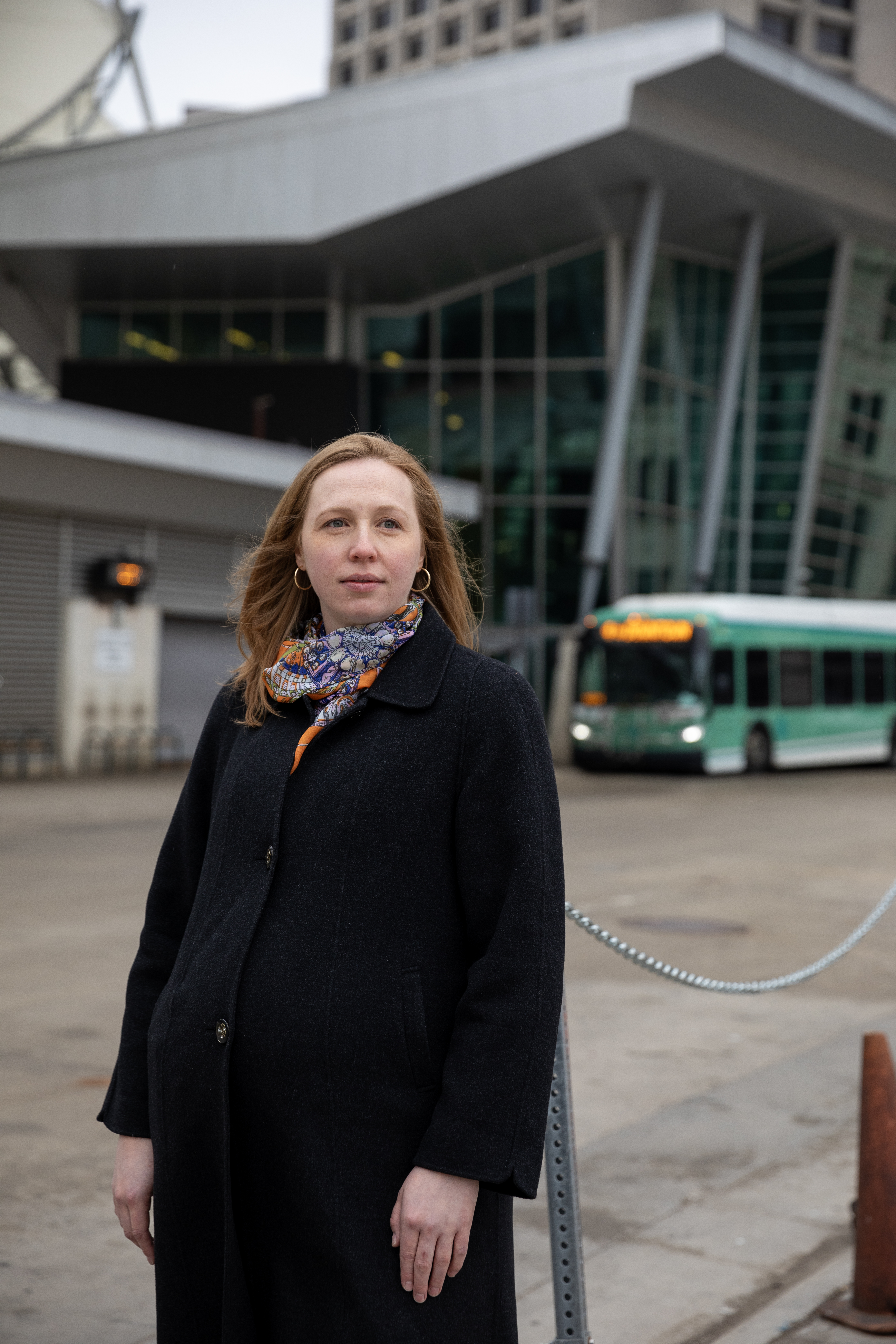 Working with people with disabilities, she creates solutions like a public transit accessibility dashboard, which started at Johns Hopkins and is now thriving at U-M. Her team navigates transit websites, noting how transit systems communicate with disabled riders, such as text that screen readers skip, option menus that cause confusion or real-time elevator outages. They share these results with advocates who relay them to city councils and transit boards. Her dashboard reached federal policymakers in 2024, shaping new accessibility priorities for transit systems across the nation.
Twardzik’s vision goes beyond compliance, building pathways to full, vibrant lives. She equips users with wearable devices to trace their daily paths, including the places they avoid. In Michigan and Oregon, she’s followed their steps, revealing the impact barriers like missing ramps or poor lighting can have on movement.
Her advocacy, inspired by disability rights activist Judy Heumann, grows from ties with disabled scholars in the American Public Health Association, where she’s a governing councilor for the Disability Section. Their stories of exclusion fuel her. She helped Detroit advocates secure 2025 transit funding for accessible buses and stops and a better website, resulting in clear schedules.
As an educator, Twardzik uses universal design for learning to create classrooms where students with varied needs succeed without requiring additional modifications. “I want students to bring their authentic selves and learn skills they can apply beyond academics,” she said. By incorporating tools like visual aids or quiet workspaces, she designs learning environments that mirror her accessible spaces for people with disabilities, enabling all students to thrive and promote accessibility in their communities.
“The University of Michigan is a place that I love. I appreciate being closer to my family and it’s a place that I’m excited to raise my family. U-M has shown me that they’re open and ready to be more inclusive of the disability community, including adaptive sports, the Disability Equity Office and the provost office’s disability scholarship initiative. The University of Michigan is looking to be a leader in this space.”