
Small birds, long journeys
By Wendy Sutton
Each summer, migratory birds arrive in Michigan to breed, and each fall, they leave.
Now, researchers at the University of Michigan can trace an individual bird’s movements over the course of a year. They can follow it from a secluded spot in Appalachia to a backyard in Tallahassee and on to a Central American coffee farm before it settles in a remote Bolivian wilderness for the winter.
Knowing precisely where birds breed, molt, stop and winter can help researchers identify the habitats and international partnerships needed to help conserve them.
The Winger Lab aims to understand why different bird species have evolved such diverse migration strategies and how those differences influence their populations. Through its geolocator project, the lab examines variation both between and within species to understand where birds travel and how long they spend at each location during their annual migration cycle.
Doctoral students Max Witynski and Matt Hack conduct the project under the direction of principal investigator Benjamin Winger, associate professor of ecology and evolutionary biology and curator of birds in the University of Michigan Museum of Zoology.
“When you hear the birds in your backyard, it may very well be the same individual year after year. You may have the same individual bird coming back to your bird feeder or nesting in your backyard tree that you did the year before. It is fascinating to think about the incredible journey this bird had.”
The team tracks multiple migratory species, including three species of thrush. The Hermit thrush is a short-distance migrant that winters near the U.S. Gulf Coast. The Swainson’s thrush is a long-distance migrant that winters along the wet eastern foothills of the Andes, while the Veery is a thrush that winters primarily in Brazil, south of the Amazon rainforest.
A long-distance migrant might breed from late May to late August in the boreal forest, then winter in the Andean foothills. By contrast, a short-distance migrant such as the Hermit thrush may breed from mid-April through September, giving it more time to raise multiple broods before wintering in Georgia or Alabama.
The Winger Lab’s research has found that birds that winter in the warm, wet tropics, where insects and fruit are abundant, tend to survive the year better than short-distance migrants, even though long-distance migration is very demanding. While short-distance migrants have more time to raise multiple broods in a year, the better survival of long-distance migrants may allow them to produce a similar number of offspring over their lifetimes.
Wintering farther south may offer another advantage. Although the southern United States has milder winters than Michigan, occasional bouts of severe cold can cause high mortality for migratory birds. The resulting population crashes may reduce genetic diversity over time. Long-distance migrants avoid such cold-weather losses and therefore may maintain greater genetic diversity.
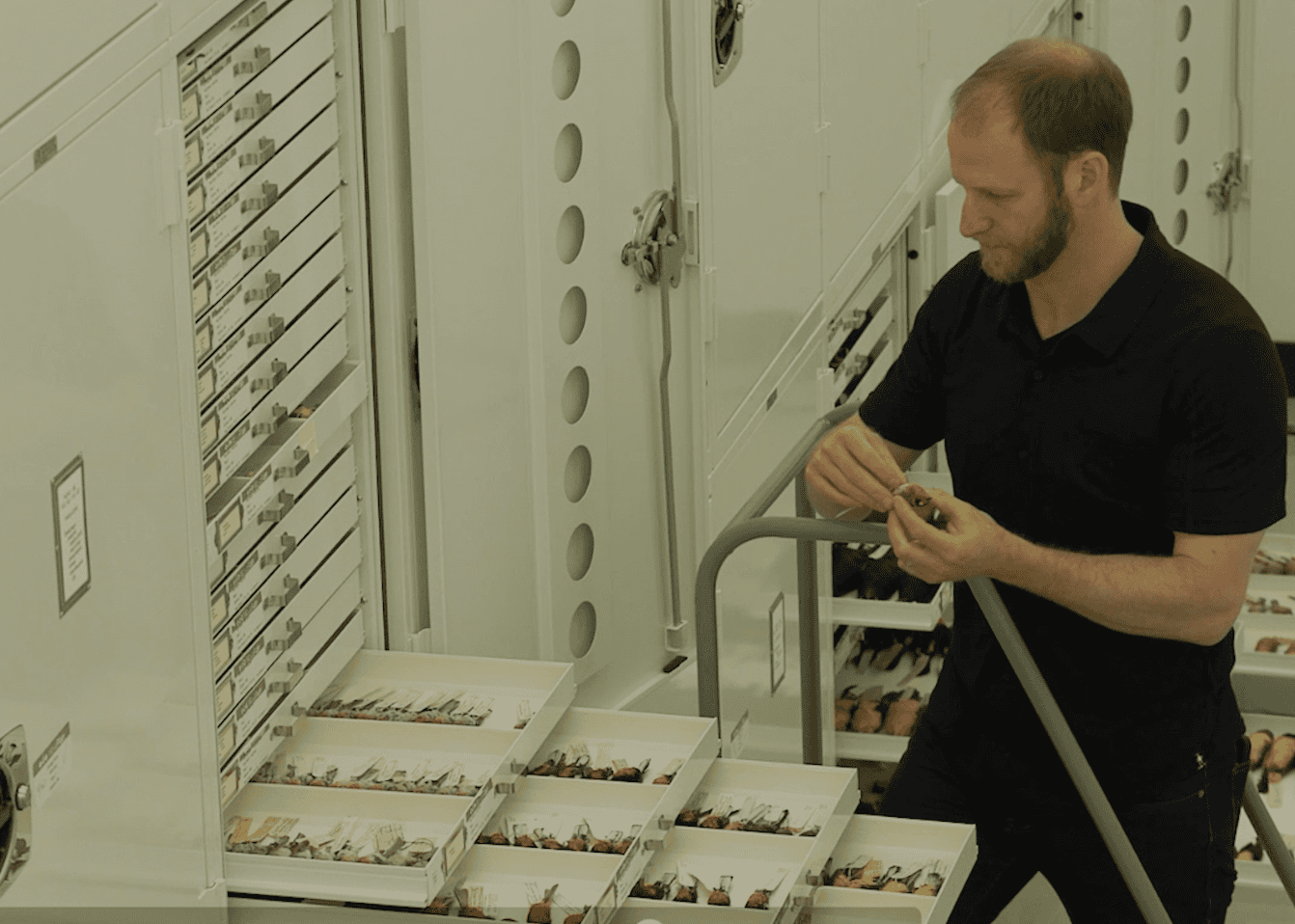
Ben Winger, curator of birds & associate professor, Department of Ecology and Evolutionary Biology, examines the historical bird collection in the University of Michigan’s Museum of Zoology.

A member of Winger’s team inspects a migratory bird’s geo locator tag while doing field work in north Michigan.
This finding suggests that migration is not simply a dangerous journey. Long-distance migrants are highly adapted to flying great distances, and reaching favorable winter habitats can provide a survival benefit that outweighs the costs of the journey.
“Typically birds spend time in one very small area,” Witynski said. “If a bird bred successfully in a particular place, it makes sense to come back to that place to be successful again. In the tropics, there are many diverse species competing for resources, whereas in temperate North America, we have really productive summers with long days when bugs emerge and trees bud and leaf out at the same time. It makes sense for birds to reproduce during these periods of high resource availability.”
During the four- to six-week field season from late May through the end of June, the Winger team rises around 4:30 a.m. to reach the birds while they are active at dawn. They drive or hike to known territories of the focal species at the University of Michigan Biological Station or Ives Lake Field Station in Marquette County in the Upper Peninsula.
At each site, the team plays recordings of the birds’ songs to draw them into vertical mist nets. Once a bird is safely captured, the researchers gently band it, attach a geolocator using a small leg-loop harness similar to a fanny pack and release it.
These small tags do not transmit data, so the team must find and recapture each bird after it returns to its breeding grounds the following spring. Once a bird establishes a territory, it is under strong selective pressure to return to the same location in subsequent years. This tendency allows the team to remove each device and retrieve its data before releasing the bird back into the wild.
“When you hear the birds in your backyard, it may very well be the same individual year after year,” Winger said. “You may have the same individual bird coming back to your bird feeder or nesting in your backyard tree that you did the year before. It is fascinating to think about the incredible journey this bird had.”
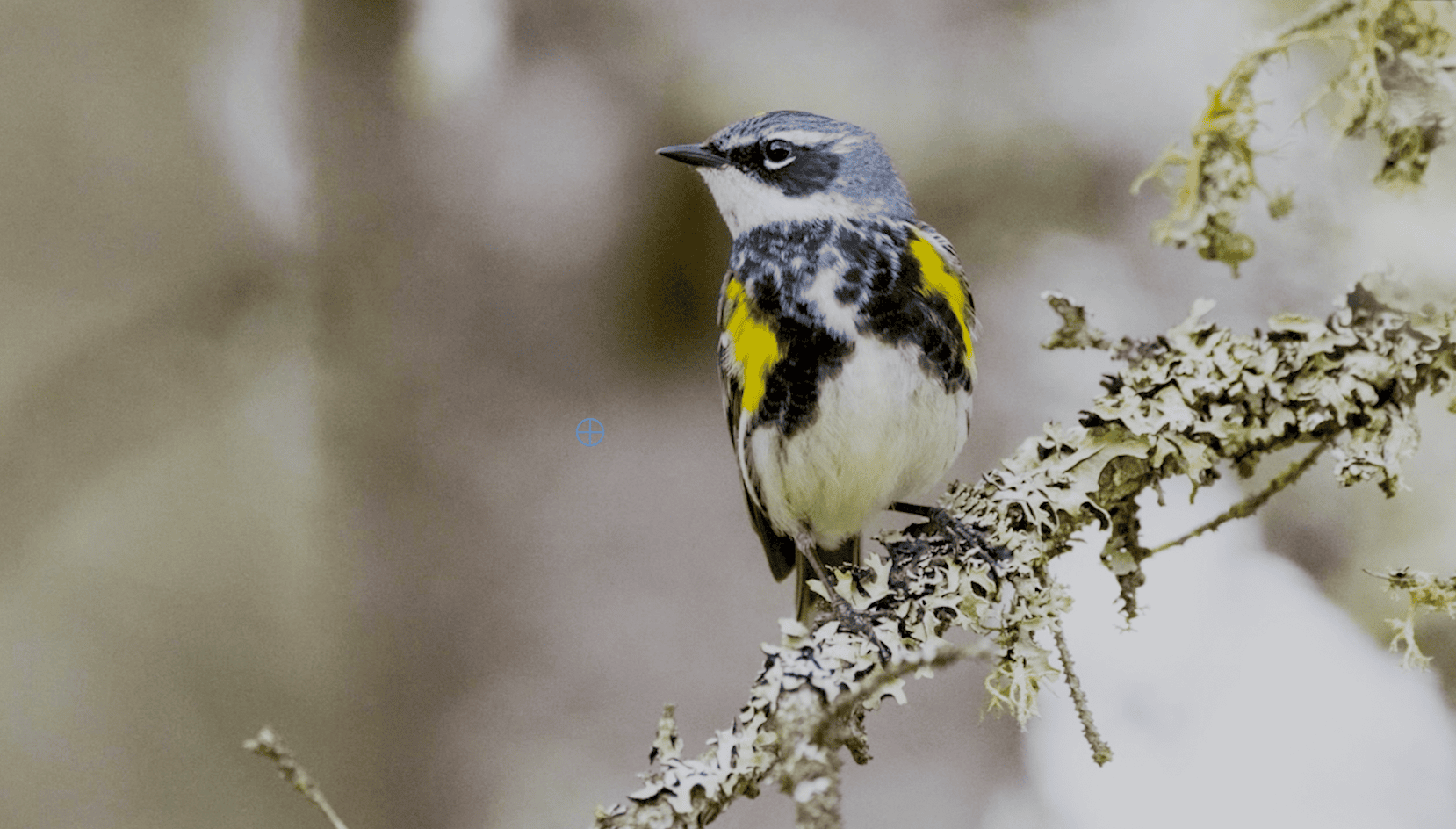
Photo credit: Ben Winger
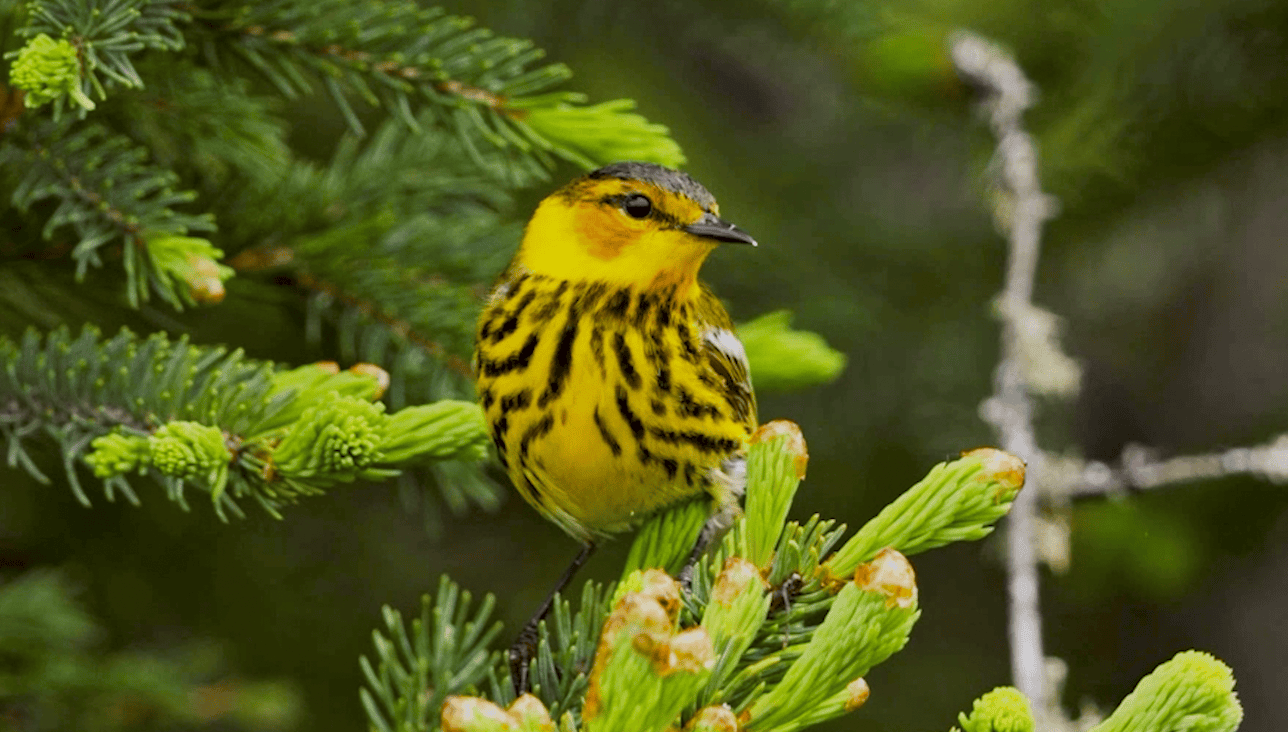
Photo credit: Brett Benz
Beyond tracking, the team works closely with and contributes to the University of Michigan Museum of Zoology. With specimens from around the world, the museum’s collection is one of the largest university biodiversity collections in the nation. Working as curatorial assistants with Winger and collections manager Brett Benz, Witynski and Hack gain experience with specimen curation and museum-based research.
Winger’s research uses tissue samples from the Museum of Zoology to study the genetic diversity of migratory birds, which sheds light on the history of populations as well as their current population health. Now, historical specimens from the museum from as far back as the 1800s allow them to extend their research into the past. By taking a small piece of skin from the toe of a preserved bird, they can sequence DNA from a bird that lived before the era of modern genetics. This enables them to examine how populations have changed over time.
This understanding is critical, as recent studies show that migratory birds are declining. North America alone is believed to have lost up to 30% of its birds since 1970.
“We really want to understand how the evolutionary differences in different migration strategies influence their population decline today,” Winger said. “Are all migratory birds facing the same conservation pressures? Are they threatened similarly or are there specific things about long-distance migrants or short-distance migrants that make them more vulnerable to population decline?”
“Migratory bird conservation is complicated because they don’t care about the borders. Birds travel the whole globe. This requires tremendous international partnership to achieve conservation. One of the greatest challenges of migratory bird conservation is simply knowing where the birds go.”