
National Oceanic and Atmospheric Administration
The National Oceanic and Atmospheric Administration partners with researchers across U-M to understand and predict changes in climate, weather, oceans and coasts, while also working to conserve and manage coastal and marine ecosystems and resources.

$17 Million
Research Supported by NOAA in FY25

54
Active Projects Supported by NOAA
The University of Michigan has received a $25 million grant from the National Oceanic and Atmospheric Administration to support collaborative research initiatives addressing critical environmental challenges in U.S. coastal communities.
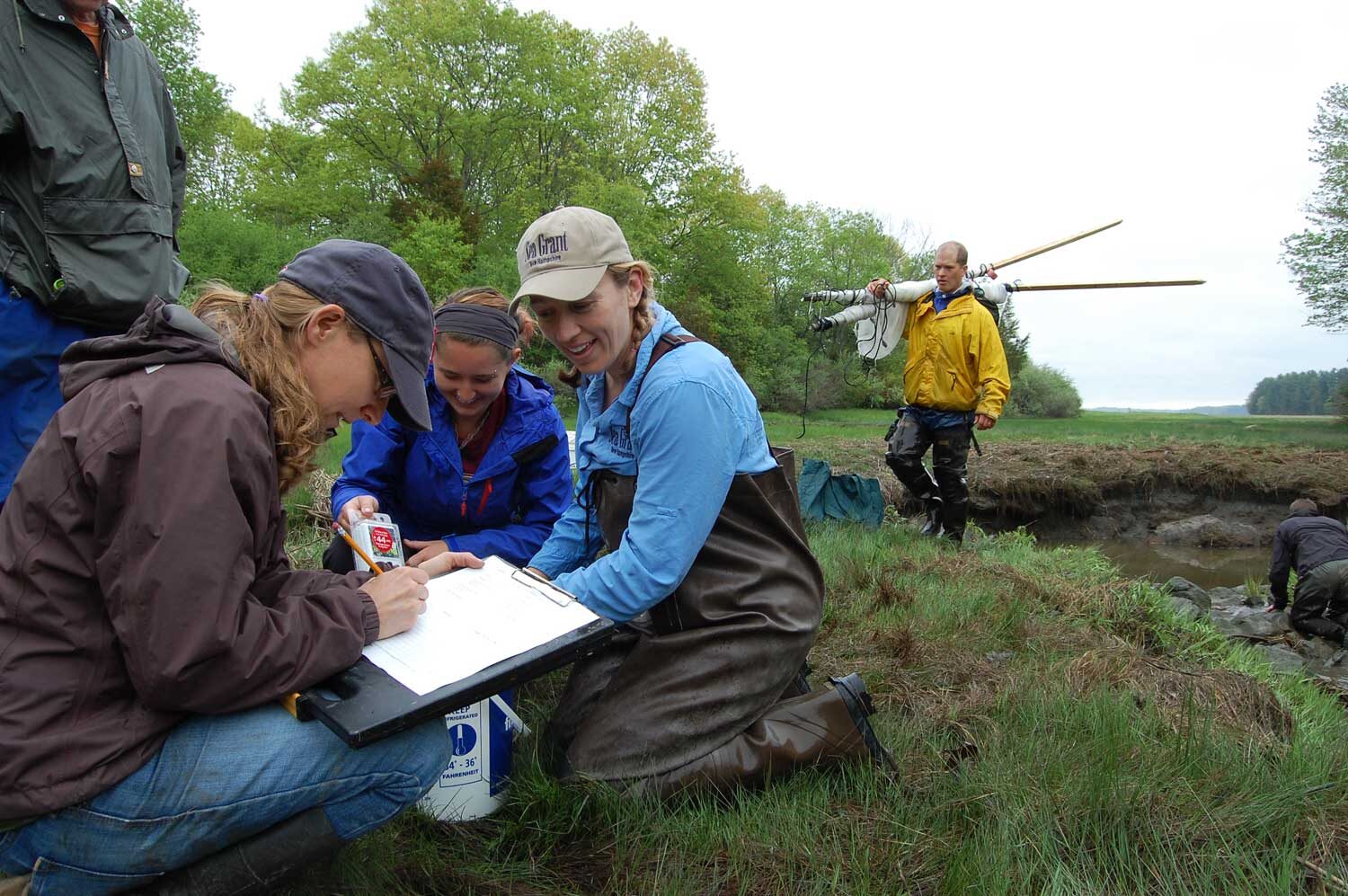
NERRS Science Collaborative-supported work at the Great Bay National Estuarine Research Reserve in New Hampshire.
Image credit: Rebecca Zeiber
Great Lakes researchers at the University of Michigan have been awarded a $6.5 million, five-year federal grant to host a center for the study of links between climate change, harmful algal blooms and human health.
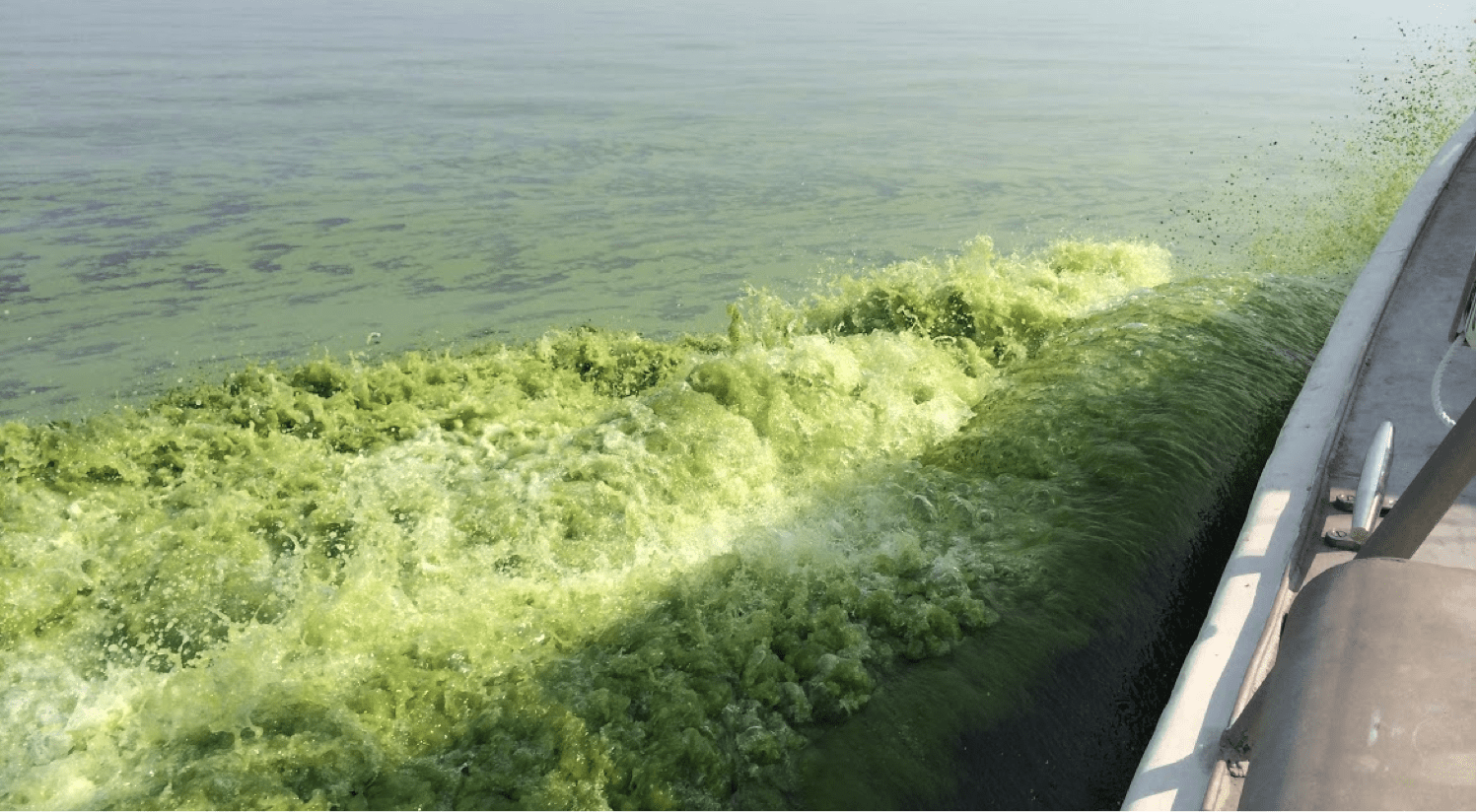
Green scum from a cyanobacterial harmful algal bloom in western Lake Erie.
Image credit: McKenzie Powers.
A team of scientists, including a University of Michigan aquatic ecologist, is forecasting an above-average summer “dead zone” in the Gulf of Mexico covering about 5,827 square miles—an area roughly the size of Connecticut.
The University of Michigan is the lead institution on a new $1.75 million project that will explore biodiversity in the Great Lakes. A grant from NOAA’s Integrated Ocean Observing System will establish a Great Lakes Biodiversity Observation Network to coordinate with and learn from biodiversity observation networks along the U.S. coasts and ocean waters and other BONs in ocean and freshwater habitats worldwide.