
All about discovery: The link between creative practice and research
By Kate Barnes
Matt Albert has always been enamored by the power of music, learning to play the violin at the age of 4.
Music runs far back in his family tree, including his great-grandparents who met at a singing school in eastern Pennsylvania. These schools brought together people from all backgrounds and beliefs to share in a common passion: using art and creativity to connect.
And that is something Matt has carried forward throughout his academic career.
“I learned early on that every performance is an opportunity for connection, and in that connection is a discovery,” said Albert, an associate professor of music in the University of Michigan School of Music, Theatre & Dance. “Within that discovery, listeners, observers, viewers are trying to identify the intent – the intent of the artist and of the art itself.”
The ideas of connection, discovery and exploration, along with the educational opportunities and resource availability, are what brought Albert into the world of academia and creative practice at the University of Michigan.
Creative practice is the process of exploring, expressing and developing ideas through artistic methods – such as art, design or music – as a form of inquiry, experimentation and knowledge-making.
Interested in how this method relates to more traditional concepts of research, Albert began identifying ways to bridge the gap – are they related, and if so, how can performers and researchers better link the two?
In art and creative practice, what is the desired outcome for the audience? In traditional research, what is the desired impact on those we serve?
“There is a discomfort in not knowing the answers to our own questions, and I think both artists and scientists have to work through that discomfort to discover truly extraordinary things,” Albert said.“Creative practice and traditional research are both very communal, both have a wide breadth of impact and each requires an iterative process to reach a final conclusion or product.”
Sharing the commonalities between creative practice and traditional research in his studio is something Albert says is unique to U-M.
“The university really provides the space for people in this field to appreciate how much they are passing on to the next generation,” he said.
“Having so many different ways we can connect and work together across disciplines is great because we want to ensure not only that everyone has a seat at the table, but that they are seated at the right table. And we are allowed the space, creativity and collaboration to do just that.”
Albert also encourages his students to engage in multidisciplinary work and critical thinking when considering their projects, noting that it is important to consider the audience point of view – similar to how traditional research must consider its study objectives and outcomes, he said.
“When thinking about traditional, hard science research, we have to realize there is a significant amount of creative thinking required, and in creative practice, we are required to also think critically,” Albert said. “The two methods are really important to our research ecosystem and more linked than most people realize.”
“When thinking about traditional, hard science research, we have to realize there is a significant amount of creative thinking required, and in creative practice, we are required to also think critically. The two methods are really important to our research ecosystem and more linked than most people realize.”
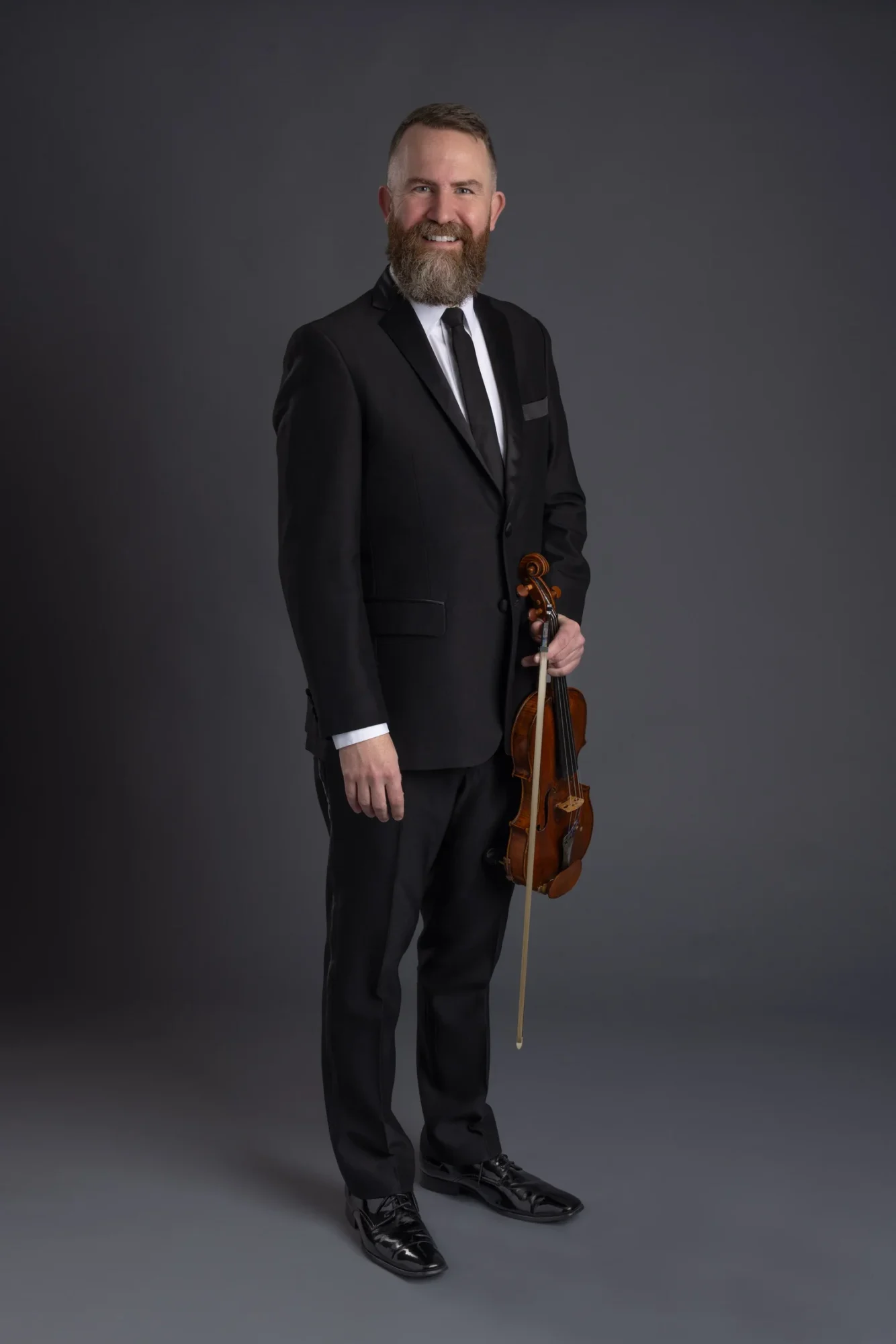
Matt Albert, Associate Professor of Music – University of Michigan School of Music, Theatre & Dance
Photo credit: Suzette Niess Photography