
U-M Research Cores Make Key Breakthroughs Possible
By Evan Keller, Director
Mariah Gavin, Assistant Director
Research Cores Office
Every day at the University of Michigan, researchers are making discoveries that improve health, power new technologies and strengthen our communities. Behind these breakthroughs is an often invisible network that makes discovery possible: our research cores.
Research cores are more than facilities. They provide access to specialized equipment, services, and expertise as shared resources. They make it possible for faculty, students and partners to test bold ideas and turn them into reality.
To help faculty and students navigate these opportunities, the Research Cores Office has launched a new website. For researchers, the site makes it simple to browse cores and search by service or equipment. For core staff, it offers guidance on managing facilities and reducing administrative hurdles. Together these features help ensure that researchers can stay focused on their science.
Expert scientists and engineers, who not only maintain advanced equipment but also provide hands-on training and collaboration, staff each core. Whether it is microscopy that reveals biology at the molecular scale, data analytics that uncover hidden patterns or fabrication that builds entirely new materials, cores give researchers the tools to ask and answer questions that cannot be solved alone.
Today, our cores are helping researchers take on some of society’s most urgent challenges. They are essential partners in advancing clinical research, where discoveries in the lab translate into new treatments and cures. In the fight against childhood cancer, scientists at the Natural Products Discovery Core are harnessing compounds from nature that may hold the key to treating deadly brain tumors once thought untreatable. In the realm of public health, the Biological Mass Spectrometry Facility is enabling researchers to uncover how exercise changes the biology of diabetes, offering new strategies to prevent and treat chronic disease. These projects highlight how cores support transformational science that is highly impactful for patients and communities alike.
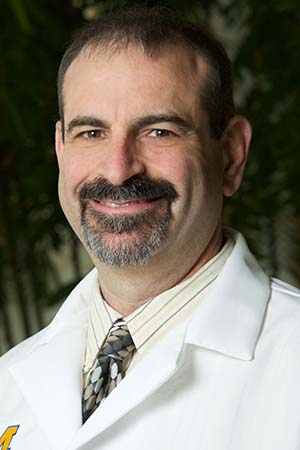
Evan Keller, Director
Research Cores Office

Mariah Gavin, Assistant Director
Research Cores Office
Our cores are also advancing discoveries that deepen our understanding of the natural world. At the BRCF Epigenomics Core, researchers are studying how monarch butterflies migrate thousands of miles with uncanny precision. Their insights into how genes respond to the environment could help unlock new ways of predicting behavior and adapting to change.
And in technology and innovation, cores are driving progress that shapes everyday life. The Michigan Center for Materials Characterization is giving scientists the ability to see the smallest structures ever observed, opening doors to new energy solutions and advanced medical devices. At the Biointerfaces Institute, engineers are designing nanoparticles that deliver drugs exactly where they are needed, holding promise for preventing aggressive cancers. Meanwhile, at the Institute for Social Research, the HomeLab is providing realistic environments for testing wearable devices, ensuring that the tools millions of people rely on to monitor their health are accurate and effective. Similarly, the Mobile Technologies Core is helping researchers harness smartphones and wearable sensors to study mental health in real time, creating new opportunities to predict crises and personalize care in ways that were not possible before.
Together these examples show how research cores fuel discoveries that ripple far beyond campus. By supporting this work, our cores enable transformational research that is highly impactful for society. They make possible the breakthroughs that improve human health, advance clinical research, protect our environment and strengthen communities across Michigan and around the world.
When researchers and partners need to think bigger, the University of Michigan’s cores are ready.
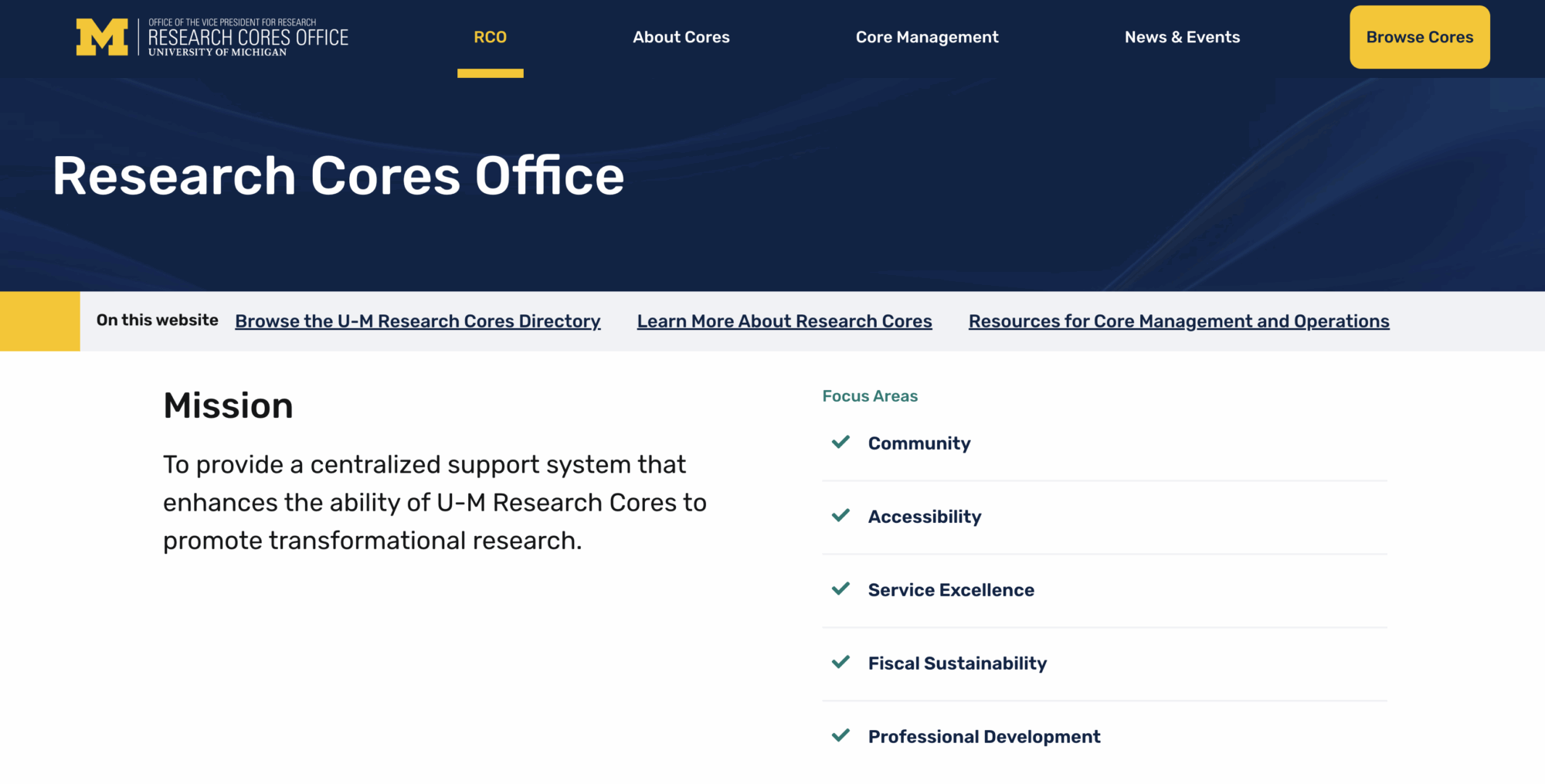
Visit the newly launched website of the Research Cores Office